هناك أداة مجانيّة يمكن لكثيرٍ من الأجانب المقيمين في إسبانيا الحصول عليها، تُمكِّنهم من إنجاز معاملاتهم في شؤون الإقامة وغيرها من الإجراءات الرسميّة مع الإدارة الإسبانيّة عبر الإنترنت، من المنزل، دون طوابير انتظار ودون مواعيد كثيراً ما يكون الحصول عليها مستحيلاً، وبقدرٍ كبير من الاستقلاليّة. تُعرف هذه الأداة بالشهادة الرقميّة (certificado digital)، وكثيرٌ ممّن هم في أمسّ الحاجة إليها لا يعلمون بوجودها.
في هذا المقال، نشرح لك ما هي هذه الشهادة، وما المشكلات التي تحلّها، ولماذا نادراً ما يتحدّث عنها المختصّون، وما علاقتها بالتسوية الاستثنائيّة 2026.
▶ دليل تفصيليّ خطوة بخطوة: كيف تحصل على شهادتك الرقميّة
فكِّر في آخر مرّة أنجزتَ فيها معاملةً رسميّةً مع الإدارة الإسبانيّة — وإن لم يسبق لك ذلك، اسأل أيّ مهاجرٍ من محيطك عن تجربته. ربّما طلبت موعداً وانتظرتَ أسابيع للحصول عليه. ربّما دفعتَ نقوداً لشخص آخر ليقوم بذلك نيابةً عنك. ربّما لا تزال القضيّة معلّقةً منذ أشهر لأنّك لا تعرف كيف تتحقّق من حالة ملفّك أو كيف تُرسل وثيقةً طُلِبت منك.
لا ينبغي أن يكون الأمر هكذا. تعمل الإدارة الإسبانيّة منذ سنوات على رقمنة خدماتها. اليوم، يمكن إنجاز كثيرٍ من الإجراءات الرسميّة عبر الإنترنت. المشكلة أنّ هذا يستلزم خطوةً واحدة: إثبات الهويّة إلكترونيّاً. ومن دون هذه الخطوة، يجد الشخص نفسه محاصراً في منظومةٍ صُمِّمت للإِسبان أو للمهاجرين ذوي الإقامة الرسميّة.
الشهادة الرقميّة (certificado digital) من أهمّ الآليّات التي بفضلها يمكن للشخص الأجنبيّ الوصول إلى كثيرٍ من خدمات الإدارة العموميّة الإسبانيّة دون التنقّل، وبقدرٍ أكبر من الاستقلاليّة.
لماذا لا أحد يتحدّث عن هذا
إن بحثتَ على يوتيوب عن معلومات حول الإجراءات الإداريّة للأجانب في إسبانيا، ستجد عشرات القنوات تشرح موضوعاتٍ مثل arraigo social (الإدماج الاجتماعيّ)، وتجديد تصاريح الإقامة، والتسوية الاستثنائيّة وغيرها. غير أنّ القليل منها يتناول الشهادة الرقميّة (certificado digital) للمهاجرين. ومن يتحدّث عنها، نادراً ما يذكر أنّها تسمح بتقديم طلبات شؤون الأجانب باسمك أو نيابةً عنك أو أنت نيابةً عن غيرك.
دون الخوض في تخمينات حول نوايا كلّ متخصّص يعمل في القطاع الخاص في مجال الهجرة، يمكن القول إنّ ثمّة أسباباً عديدةً لهذا الغياب. أحدها أنّ كثيراً من الأدلّة الإرشاديّة تتمحور حول الإجراء النهائيّ لا الأداة التي تُتيح إنجازه إلكترونيّاً. سببٌ آخر هو أنّ الحصول على التعريف الإلكترونيّ لا يزال يبدو معقّداً لكثيرٍ من الناس، في حين أنّه بتفسيرٍ واضح يكون في الغالب أكثر يُسراً ممّا يبدو.
intercultural.info موجودٌ تحديداً لكسر هذه الديناميكيّة.
ما فائدة الشهادة الرقميّة في الحياة الواقعيّة للمهاجرين في إسبانيا؟
بالشهادة الرقميّة (certificado digital)، يستطيع المهاجر، من بين أشياء أخرى:
تقديم طلبات شؤون الأجانب (التسوية الاستثنائيّة، arraigo، التَّجمع العائلي، تجديد التصاريح…) إلكترونيّاً عبر منصّة Mercurio
الاطّلاع على حالة ملفّ الإقامة وتنزيل القرارات والإشعارات
إرسال وثائق إلى ملفٍّ مفتوح دون الحاجة إلى الحضور الشخصيّ
طلب شهادة السُّكنى (empadronamiento) في البلديّات التي تتيح ذلك إلكترونيّاً
الحصول على تقرير الحياة العمليّة ووثائق أخرى من الضمان الاجتماعيّ (Seguridad Social)
تقديم طلب معادلة الشهادات الدراسيّة أو الاعتراف بالمؤهّلات المحصّلة في الخارج
الوصول إلى الملفّ الإلكترونيّ للمواطن (Mi Carpeta Ciudadana)، البوّابة الموحّدة للإدارة الإسبانيّة
توقيع الوثائق بصلاحيّة قانونيّة كاملة دون الحاجة إلى وساطة أو كاتب عدل
خلاصة القول: الشهادة الرقميّة (certificado digital) تجعل من الشخص طرفاً فاعلاً أمام الإدارة، قادراً على إدارة شؤونه بنفسه دون الاعتماد بالضرورة على وسطاء أو مواعيد كثيراً ما تكون عسيرة الحصول.
ما هو التعريف الإلكترونيّ وما هي خياراتك؟
التعريف الإلكترونيّ هو الوسيلة لإثبات هويّتك أمام الإدارة عبر الإنترنت بطريقة آمنة. في إسبانيا، تتوفّر عدّة أنظمة:
الشهادة الرقميّة (certificado digital — FNMT): الأشمل والأكثر استعمالاً. مجانيّ، صالح لدى جميع مصالح الإدارة الإسبانيّة، يسمح لك ليس فقط بإثبات هويّتك بل أيضاً بتوقيع الوثائق بصلاحيّة قانونيّة كاملة. تُصدره المؤسّسة الوطنيّة لسكّ العُملة والطوابع (FNMT). وهو في الواقع العمليّ الأكثر فائدةً في كثيرٍ من المعاملات الإلكترونيّة لشؤون الأجانب، بما فيها تقديم الطلبات عبر منصّة Mercurio حين يسمح الإجراء بذلك.
Cl@ve Permanente مع Cl@ve Firma: بديلٌ صالح للتعريف والتوقيع أيضاً. يستلزم إجراء تسجيل حضوريّاً (أو بالتعريف المرئيّ عن بُعد إذا كنت حاصلاً على الجنسيّة الإسبانيّة). مع تفعيل Cl@ve Firma، يمكن استخدامه لتوقيع بعض المعاملات الإلكترونيّة، وقد يكون بديلاً صالحاً تبعاً للإجراء المطلوب.
Cl@ve PIN: نظامٌ أوّليّ للتعريف. يسمح بالاطّلاع على الملفّات وإثبات الهويّة أمام الإدارة، لكنّه لا يسمح بتوقيع الطلبات. مفيدٌ للاستفسارات؛ صالحٌ للتعريف في بعض الخدمات، غير أنّه وحده لا يكفي عادةً حين يشترط الإجراء التوقيع الإلكترونيّ.
شهادات الحكومات الجهويّة (comunidades autónomas) وهيئات أخرى: إضافةً إلى FNMT، تتوفّر جهات إصدار شهادات رقميّة أخرى معترف بها من الدولة الإسبانيّة، مثل: ACCV (جهة فالنسيّة)، وIzenpe (بلاد الباسك)، وCATCert (كتالونيا)، وغرف التجارة عبر Camerfirma. جميعها صالحة للمعاملات مع الإدارة. في بعض المناطق، الحصول على الشهادة عبر البلديّة ذاتها أو هذه الجهات قد يكون أكثر يُسراً من المسار عبر FNMT.
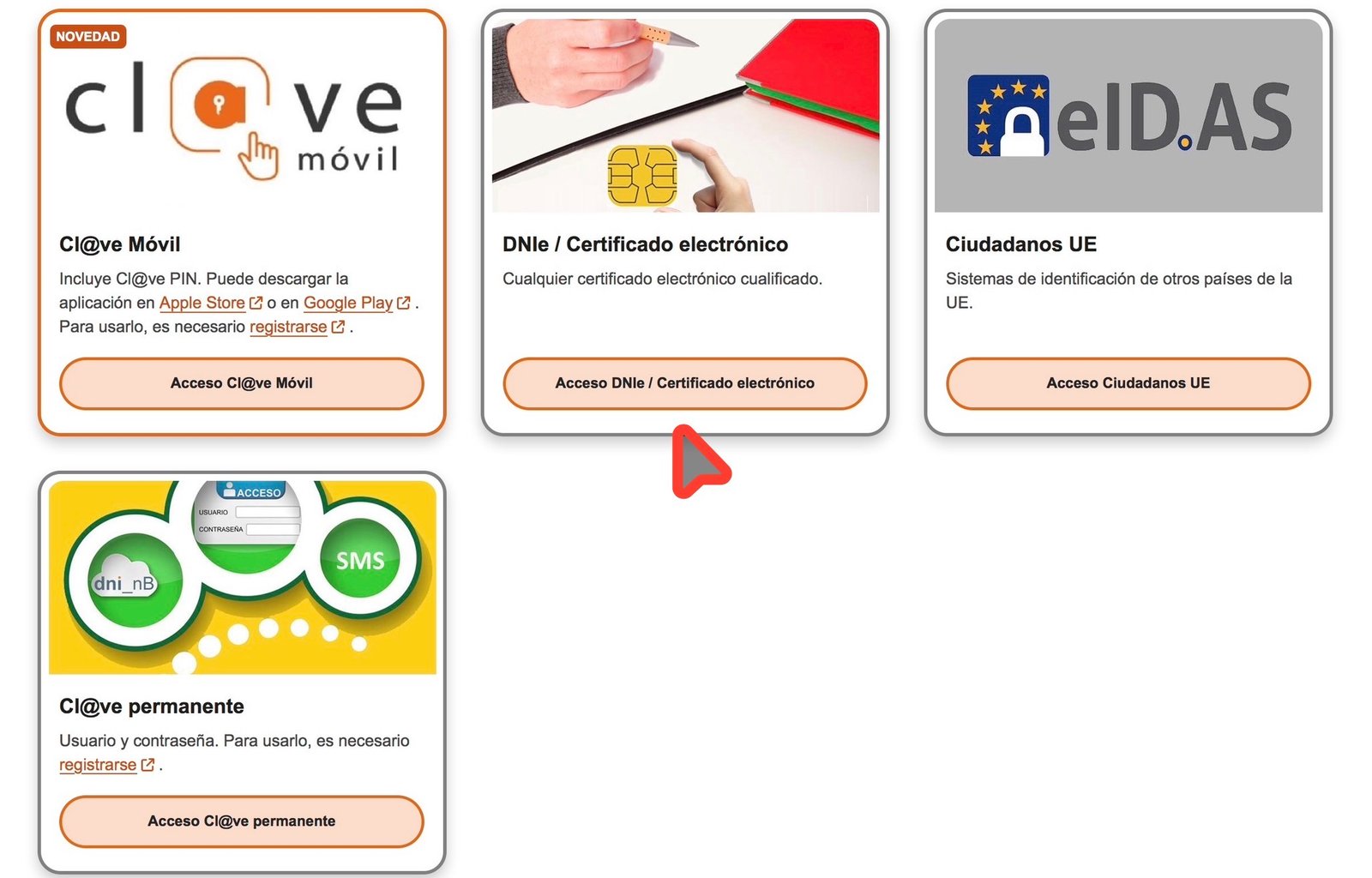
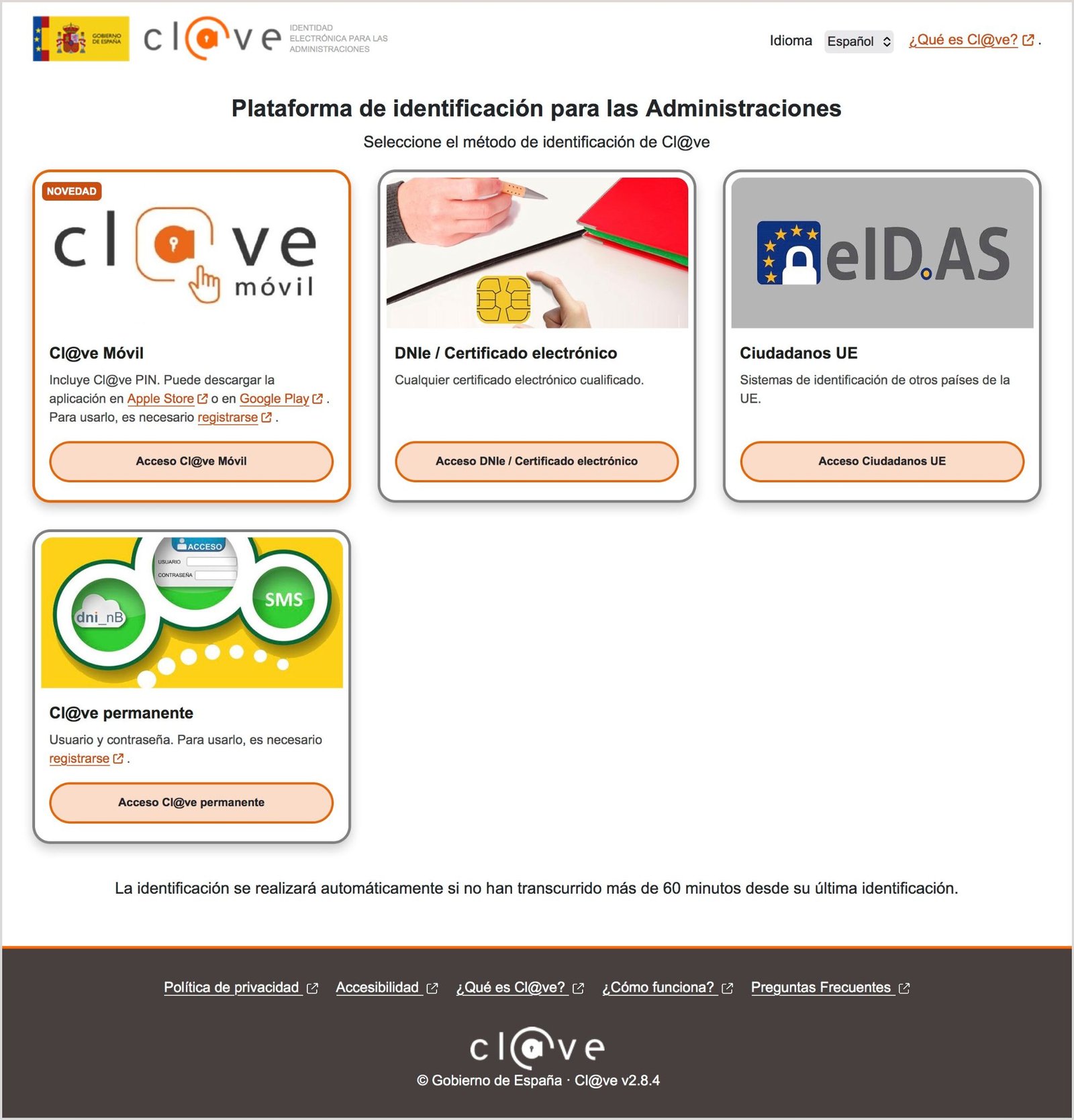
أشكال التعريف أمام الإدارة الإسبانيّة | المصدر: carpetaciudadana.gob.es (دخول عبر بوّابة Cl@ve)
في هذا المقال، نُركّز على الشهادة الرقميّة (certificado digital) الصادرة عن FNMT، باعتبارها الأكثر شموليّةً في جميع أنحاء البلاد.
NIE وتصريح الإقامة (autorización de residencia) وTIE: ثلاثة أشياء مختلفة — ولماذا يعنيك هذا المقال حتّى لو لم تكن تتوفّر على أوراق الإقامة
قبل الحديث عمّن يستطيع الحصول على الشهادة الرقميّة، لا بدّ من توضيح ثلاثة مفاهيم كثيراً ما تختلط:
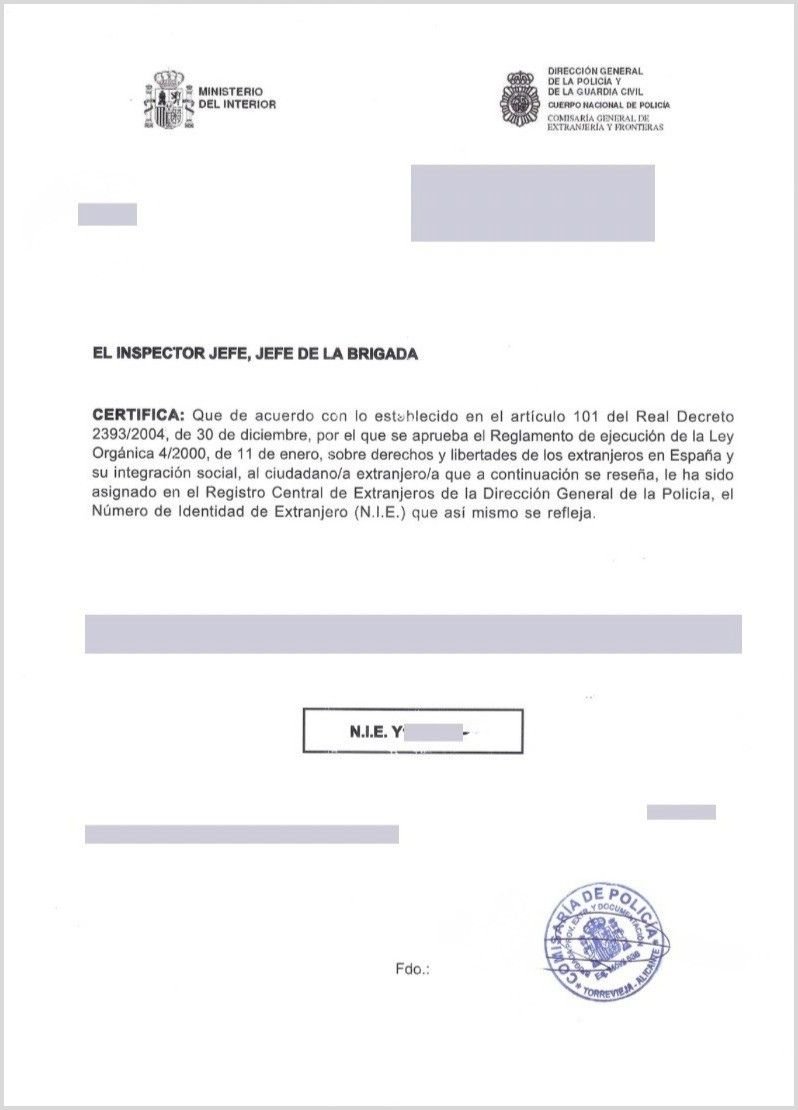
NIE (رقم تعريف الأجانب): هو رقمٌ للتعريف — لا وثيقةٌ ولا تصريح. تُسنده الشرطة الوطنيّة (Policía Nacional) لكلّ أجنبيّ يُباشر أيّ إجراء رسميّ مع الإدارة الإسبانيّة، أو عند طلبه أمامها بإثبات مصلحة مشروعة (وفق شروط محدّدة). يمكن للشخص أن يمتلك NIE حتّى في غياب تصريح إقامة سارٍ أو في انعدامه كليّاً.
مثال على وثيقة إسناد NIE | المصدر: وثيقة حقيقيّة، بيانات شخصيّة مُجَهَّلة من قِبَل intercultural.info
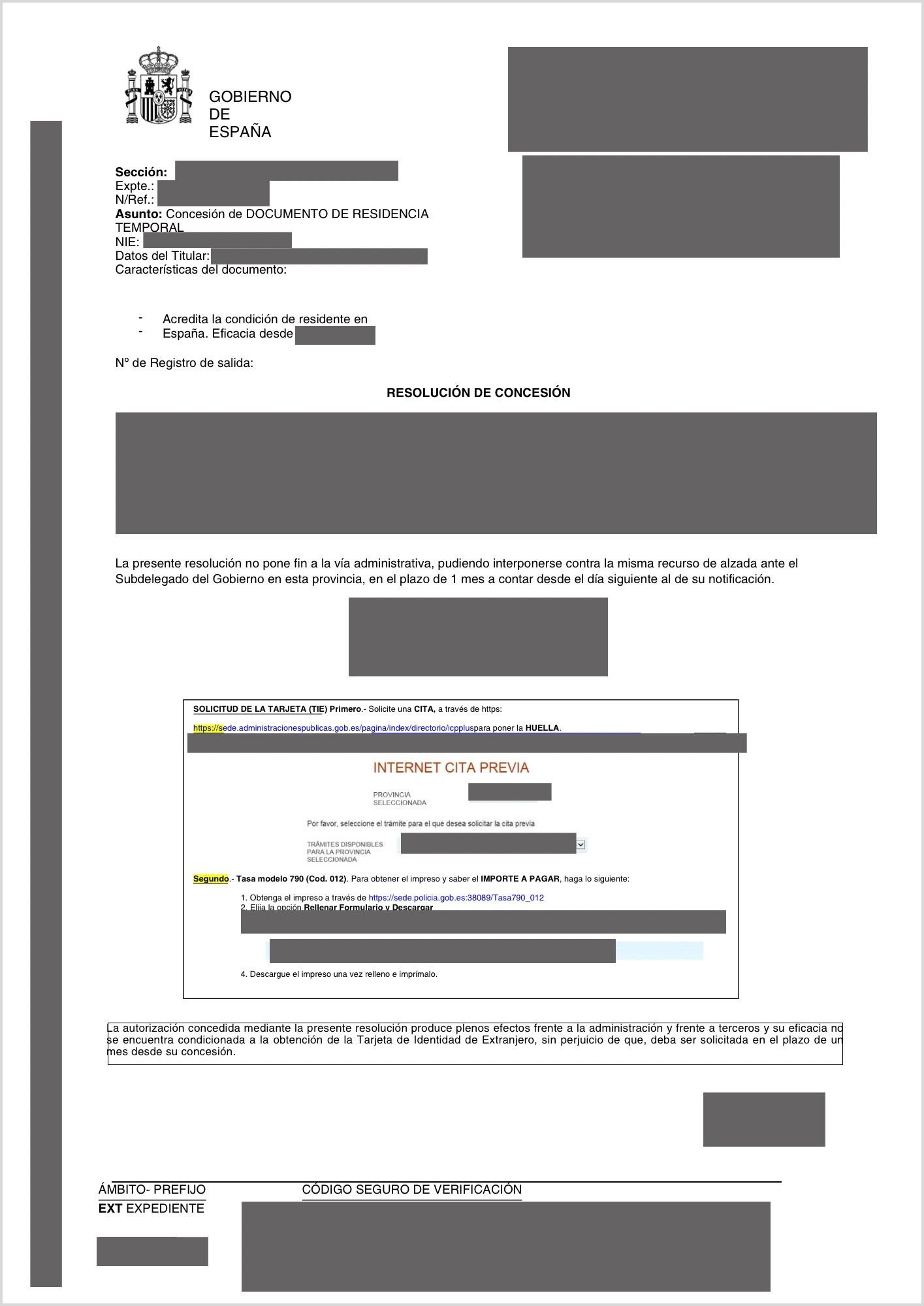
تصريح الإقامة (autorización de residencia): هو الإذن الإداريّ الذي يُخوِّل الإقامة في إسبانيا. يختلف عن NIE وعن TIE.
مثال على قرار منح تصريح الإقامة | المصدر: وثيقة حقيقيّة، بيانات شخصيّة مُجَهَّلة من قِبَل intercultural.info
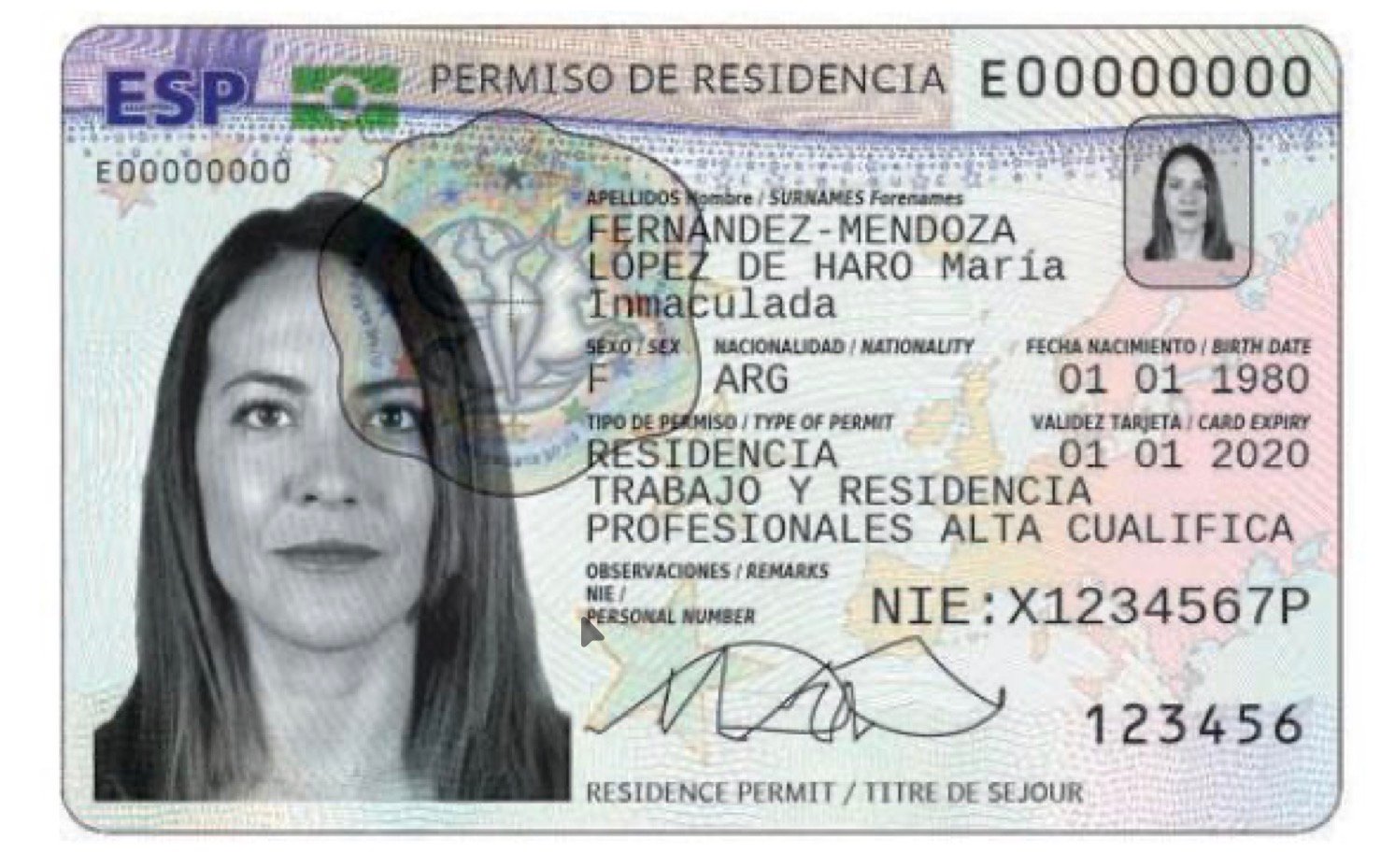
TIE (بطاقة هويّة الأجانب): هي تصريح الإقامة في صيغة بطاقة. تحمل NIE والصورة ونوع التصريح الممنوح.
هذا الدليل يرشدك خطوةً بخطوة للحصول على certificado digital (الشهادة الرقميّة) الصادرة عن FNMT (المؤسّسة الوطنيّة لسكّ العُملة والطوابع). الشهادة مجانيّة، وتسمح لك بإنجاز معاملات شؤون الأجانب وكثيرٍ من الإجراءات الرسميّة الأخرى مع الإدارة الإسبانيّة عبر الإنترنت.
إن أردتَ أن تفهم بشكل أعمق ما هو certificado digital (الشهادة الرقميّة) وما الذي تُمكِّننا من القيام به وما علاقتها بالتسوية الاستثنائيّة 2026، ننصحك بقراءة مقالنا الشامل: certificado digital (الشهادة الرقميّة) للأجانب في إسبانيا.
⚠️ هل تنتظر التسوية الاستثنائيّة 2026؟
إن تأكّدت القناة الإلكترونيّة في BOE (الجريدة الرسميّة)، فستحتاج إلى certificado digital (الشهادة الرقميّة) أو نظام توقيع إلكترونيّ لتقديم طلبك عبر منصّة Mercurio — أو أن يقوم بذلك شخصٌ آخر نيابةً عنك. نشرح هذه العلاقة في الفقرة: «والتسوية الاستثنائيّة 2026؟».
إن كان لديك NIE (رقم تعريف الأجانب) — حتّى وإن لم يكن لديك تصريح إقامة سارٍ ولا TIE (بطاقة تعريف الأجانب) — يمكنك الحصول على هذه الشهادة. في الفقرات التالية نوضّح الوثائق التي تقبلها FNMT.
وماذا إن لم يكن لديك NIE؟ هذا الدليل قد يهمّك أيضاً. إن كان لديك أحدٌ من عائلتك أو أصدقائك أو أيّ شخص موثوق به يمتلك تصريح إقامة أو الجنسيّة الإسبانيّة، يمكن لهذا الشخص الحصول على شهادته الرقميّة وتقديم بعض الطلبات نيابةً عنك بوصفه ممثّلاً، إن كان الإجراء يسمح بذلك. معرفة كيفيّة عمل هذا المسار ستساعدك في الاستعداد.
يتّبع هذا الدليل نفس الخطوات الموضَّحة من قِبَل وكالة مصلحة الضرائب (AEAT / Hacienda) في الفيديو الرسميّ الخاصّ بكيفيّة الحصول على شهادة إلكترونيّة من FNMT. بعض المُقتطفات مأخوذة من ذلك الفيديو. وبما أنّ إجراءات الإدارة قابلة للتغيير في أيّ وقت، فقد تحقّقنا من أنّ هذا المسار هو الساريّ إلى تاريخ نشر الدليل.
ما تحتاجه قبل البدء
قبل الشروع في الإجراء، تأكّد من أنّ لديك:
NIE الخاصّ بك ووثيقة تُثبته (انظر أدناه الوثائق التي تقبلها FNMT)، إلى جانب جواز سفرك.
حاسوب (يعمل بنظام Windows أو Mac أو Linux). يجب إنجاز العمليّة كاملةً من الجهاز ذاته، بحساب المستخدم ذاته والمتصفّح (navegador / browser) ذاته.
عنوان بريد إلكترونيّ يمكنك الوصول إليه.
متصفّح محدَّث: Mozilla Firefox أو Google Chrome أو Microsoft Edge أو Opera أو Safari.
مهمّ: لا تُعيد تهيئة الحاسوب ولا تُغيِّر المتصفّح أو حساب نظام التشغيل خلال الإجراء. يجب إنجاز كلّ شيء من الجهاز ذاته من البداية إلى النهاية.
قد تختلف مظاهر بعض النوافذ عن لقطات الشاشة الواردة في هذا الدليل، تبعاً لنظام التشغيل (sistema operativo: Windows أو Mac أو Linux) المُثبَّت على جهازك.
الخطوة 1 — تثبيت برنامج FNMT
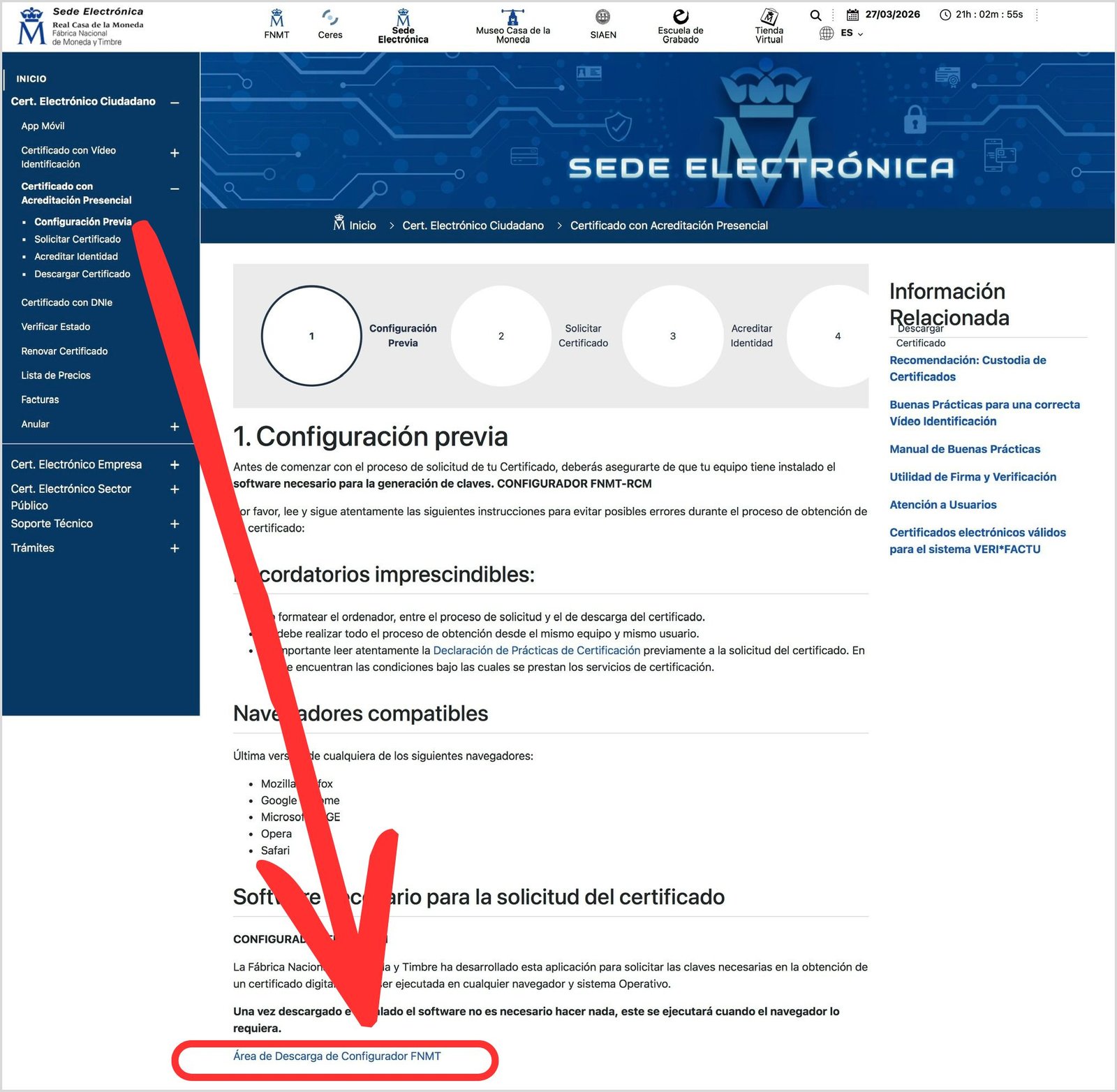
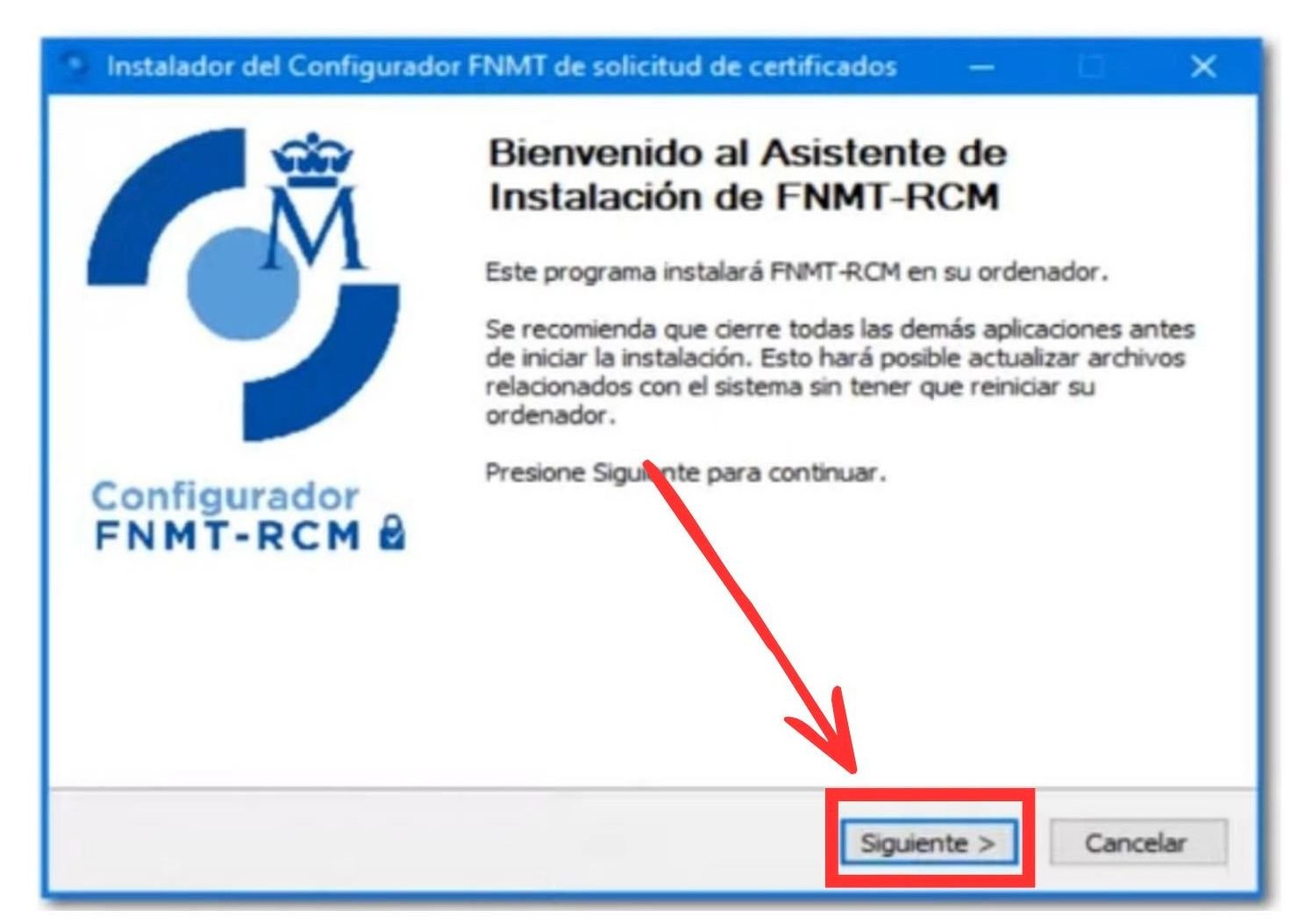
قبل تقديم طلب الشهادة، تحتاج إلى تثبيت برنامج صغير يُعرَف بـ Configurador FNMT-RCM (برنامج ضبط الشهادة الرقميّة). يُولِّد هذا البرنامج مفاتيح الأمان اللازمة لشهادتك. يعمل على Windows وMac وLinux.
صفحة الضبط المسبق لـFNMT | المصدر: sede.fnmt.gob.es
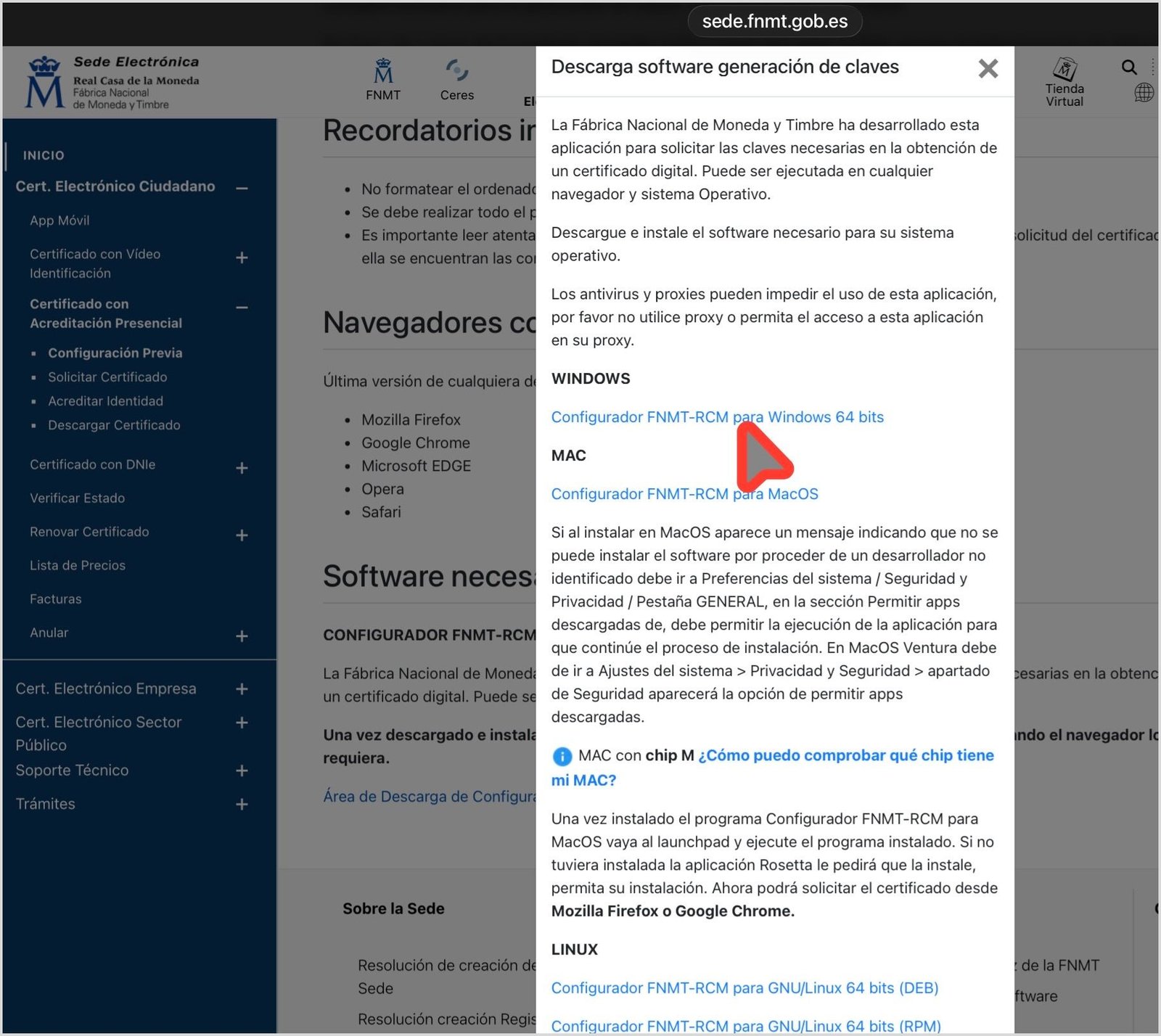
اختر رابط التنزيل المناسب لنظام تشغيلك (Windows أو Mac أو Linux) واتّبع خطوات معالج التثبيت.
اختيار نظام التشغيل لتنزيل Configurador FNMT-RCM | المصدر: sede.fnmt.gob.es
على أجهزة Mac، قد تحتاج إلى الإذن بالتثبيت من: إعدادات النظام › الخصوصيّة والأمان. بعد التثبيت، لا حاجة لفتح البرنامج يدويّاً: سيعمل تلقائيّاً حين يحتاجه المتصفّح.
ننصحك أيضاً بتثبيت برنامج AutoFirma (برنامج التوقيع الإلكترونيّ)، الذي تحتاجه كثيرٌ من صفحات الإدارة للعمل مع الشهادة الرقميّة، كمنصّة Mercurio المخصّصة لتقديم كثيرٍ من طلبات شؤون الأجانب إلكترونيّاً. يمكن تنزيله من firmaelectronica.gob.es.
رقم NIE الخاصّ بك (يبدأ بحرف وينتهي بحرف وبينهما سبعة أرقام).
اللقب الأوّل، مطابقاً تماماً لما هو مُدوَّن في وثيقة هويّتك.
عنوان بريدك الإلكترونيّ.
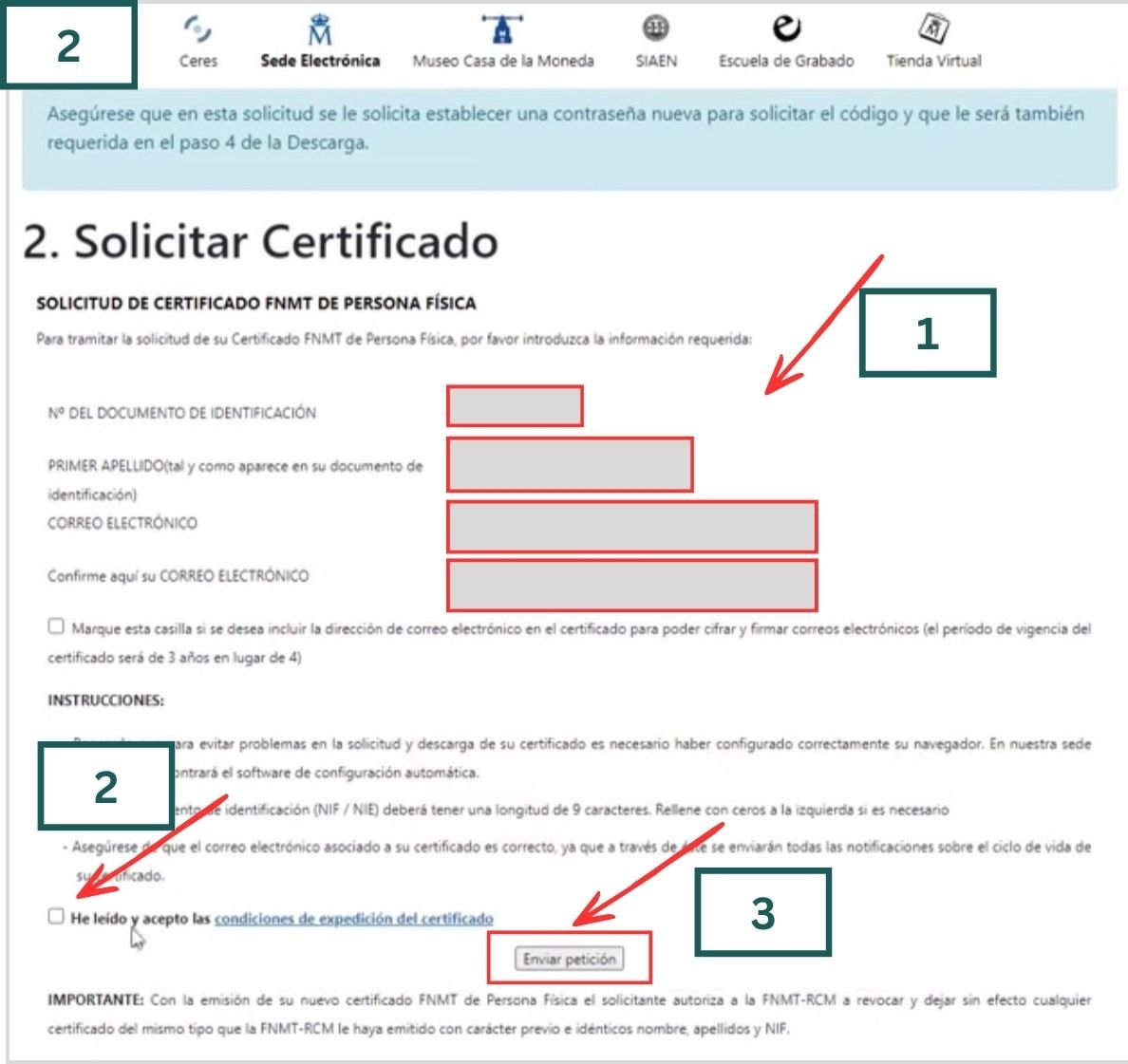
استمارة طلب certificado digital (الشهادة الرقميّة) | المصدر: sede.fnmt.gob.es (لقطة من فيديو AEAT التعليميّ)
في الاستمارة، عبِّئ الحقول الأربعة:
الحقل 1: رقم وثيقة التعريف (NIE في حالة الأجانب من غير حاملي الجنسيّة الإسبانيّة)
الحقل 2: اللقب الأوّل
الحقل 3: البريد الإلكترونيّ
الحقل 4: إعادة كتابة البريد الإلكترونيّ ذاته
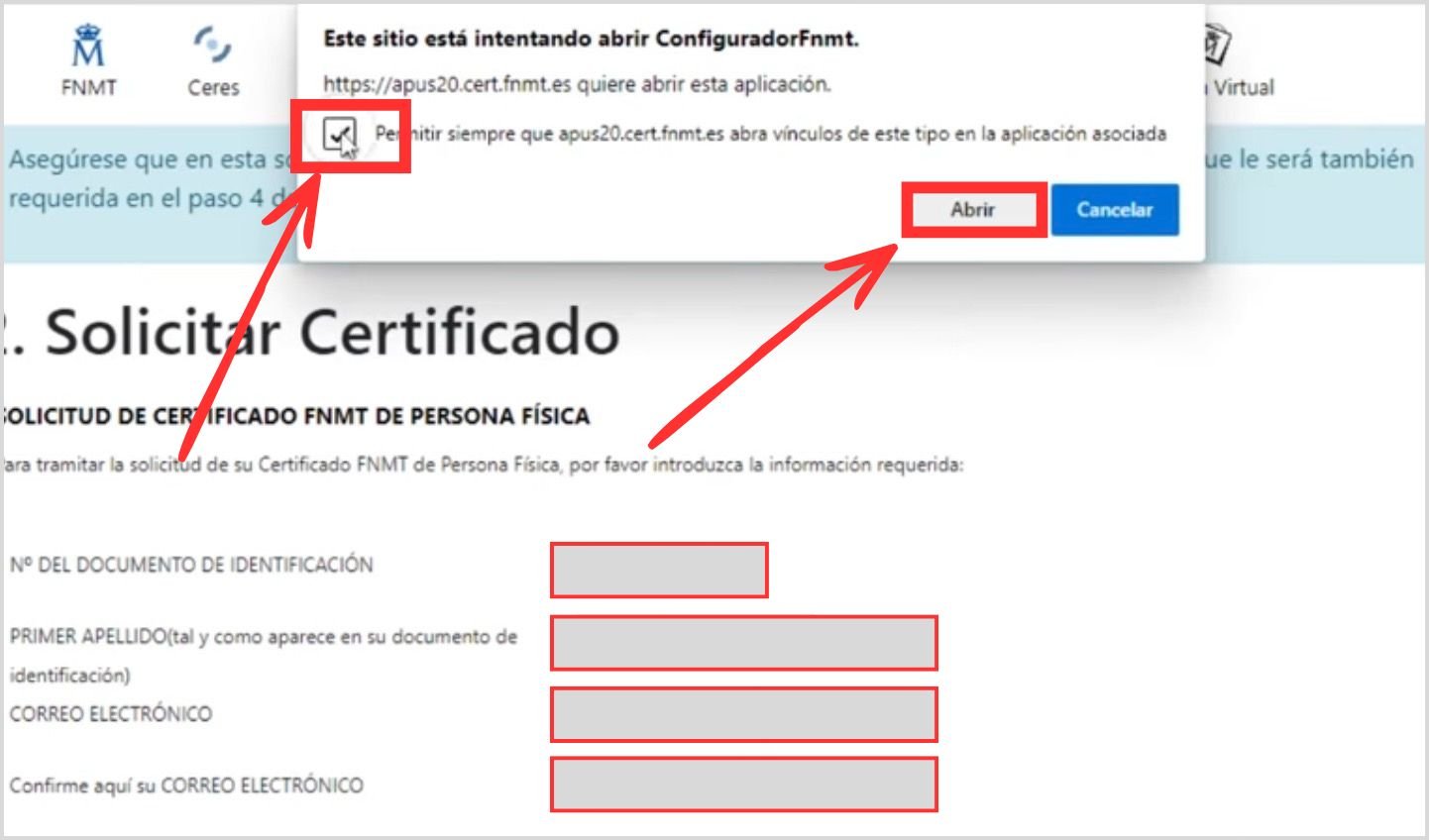
اقرأ شروط الاستخدام وافق عليها. عند الضغط على «إرسال الطلب»، سيطلب المتصفّح إذناً لفتح Configurador FNMT-RCM. في النافذة التي تظهر، انقر على «فتح». وإن عُرضت عليك إمكانيّة السماح بالوصول دائماً، فعِّلها.
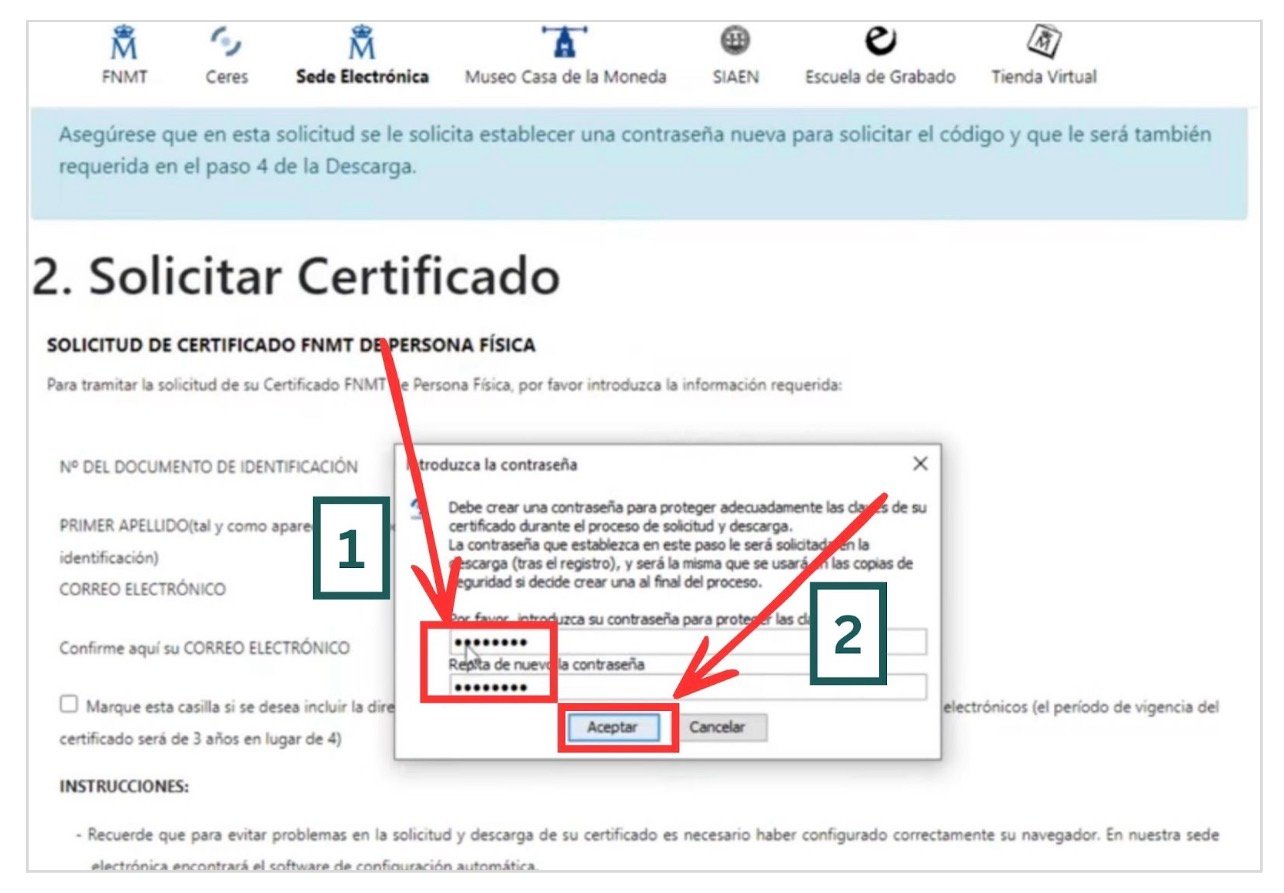
بعد ذلك، سيطلب منك النظام إنشاء كلمة مرور لحماية مفاتيح شهادتك. احتفظ بها في مكان آمن: ستحتاجها لتنزيل الشهادة ولا يمكن استرجاعها. ستُستخدَم كلمة المرور ذاتها للنسخة الاحتياطيّة أيضاً.
نافذة إنشاء كلمة المرور | المصدر: sede.fnmt.gob.es (لقطة من فيديو AEAT التعليميّ)
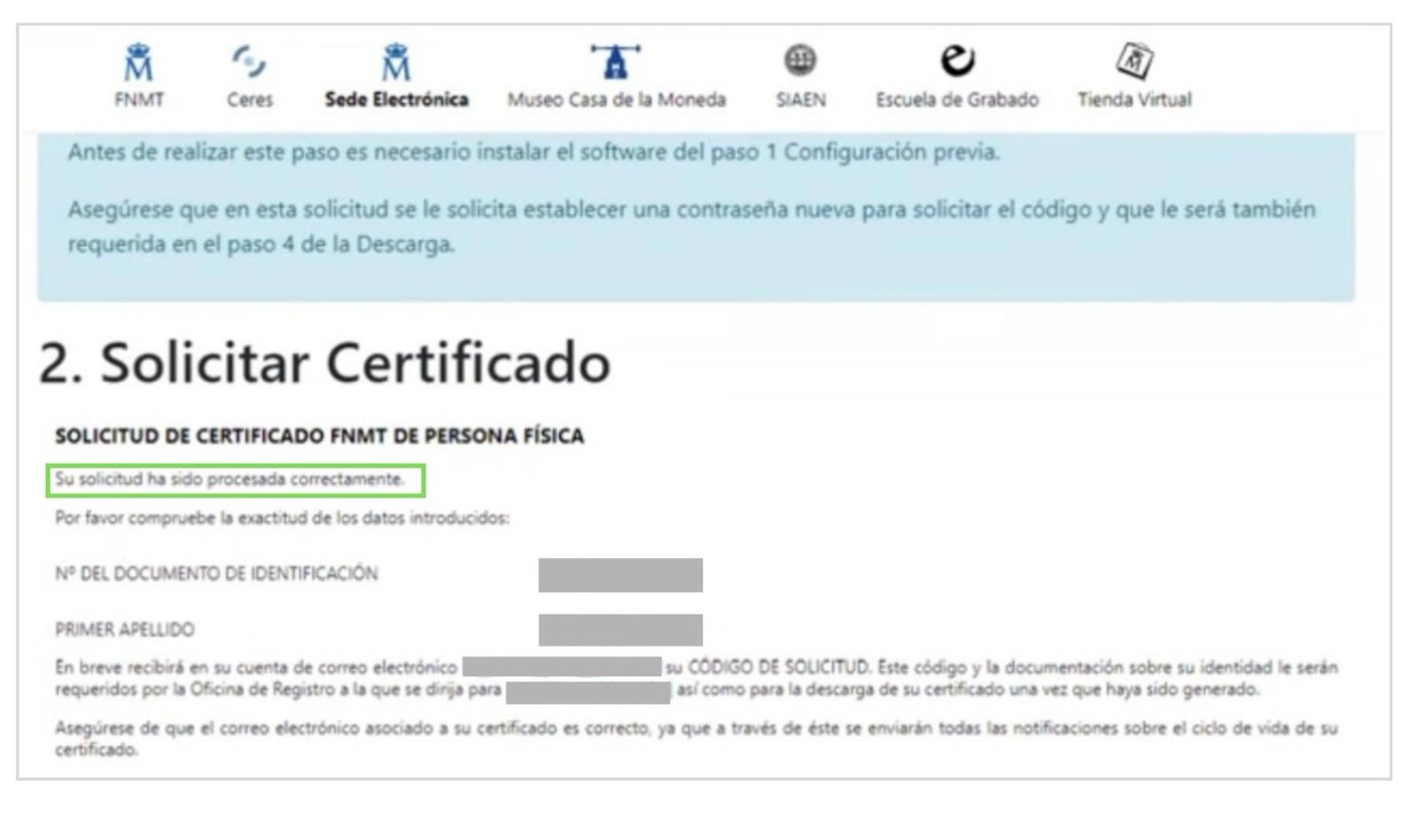
إن سارت الأمور على ما يرام، ستظهر لك رسالة تأكيد تتضمّن بياناتك.
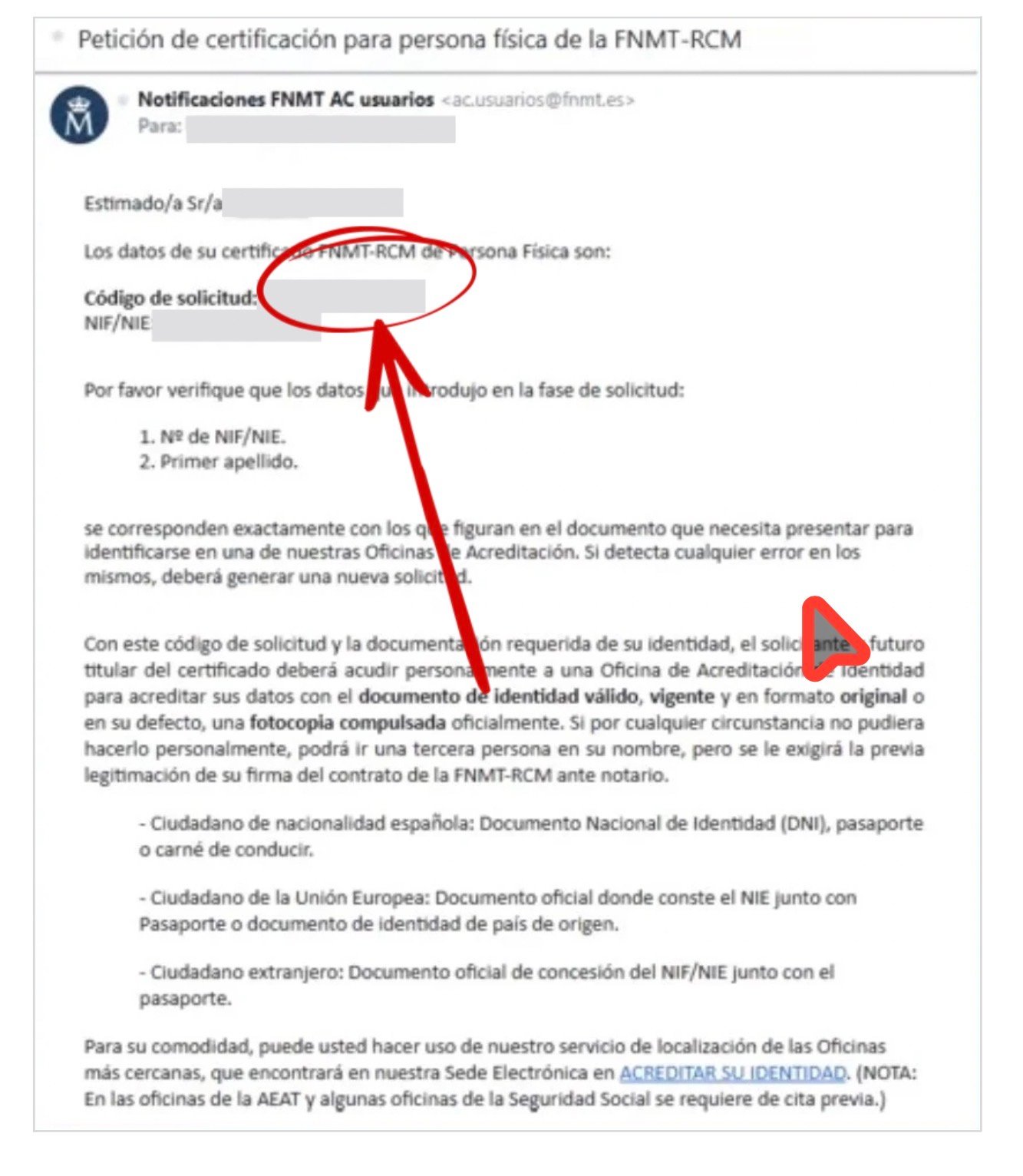
ستصلك رسالة بريد إلكترونيّ تتضمّن رمز الطلب الخاصّ بك. دوِّنه أو اطبعه: ستحتاجه في المكتب وعند تنزيل الشهادة.
رسالة FNMT تتضمّن رمز الطلب | المصدر: sede.fnmt.gob.es (لقطة من فيديو AEAT التعليميّ)
الخطوة 3 — التحقّق من هويّتك في مكتب مختصّ
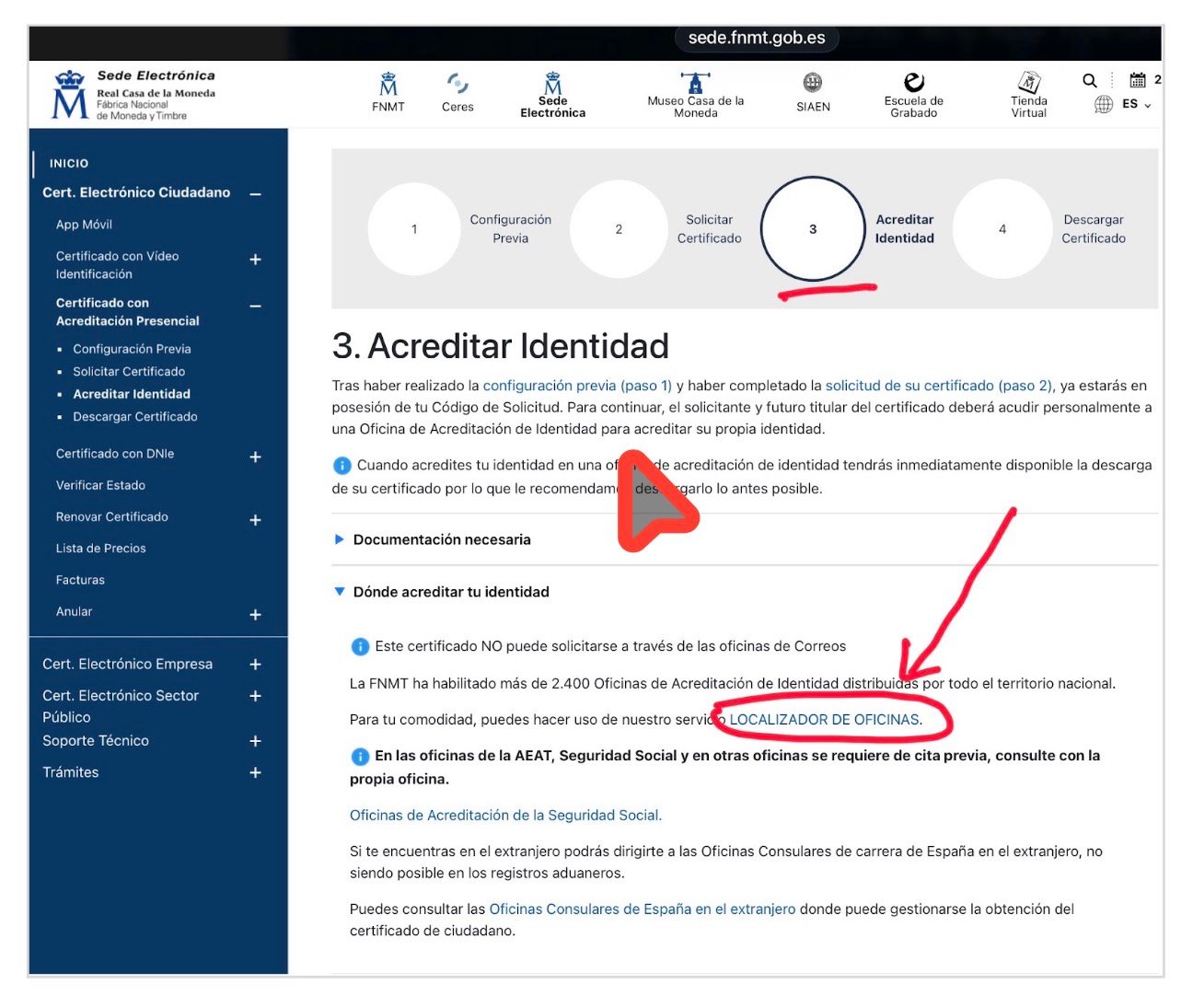
الآن عليك التوجّه شخصيّاً إلى مكتب التحقّق من الهويّة للتثبّت أنّك صاحب الطلب. تتوفّر لـFNMT أكثر من 2.400 مكتب في جميع أنحاء إسبانيا: مكاتب الضمان الاجتماعيّ (Seguridad Social)، ومصلحة الضرائب (AEAT / Hacienda)، والبلديّات وغيرها من الجهات.
صفحة «3. إثبات الهويّة» في بوّابة FNMT | المصدر: sede.fnmt.gob.es
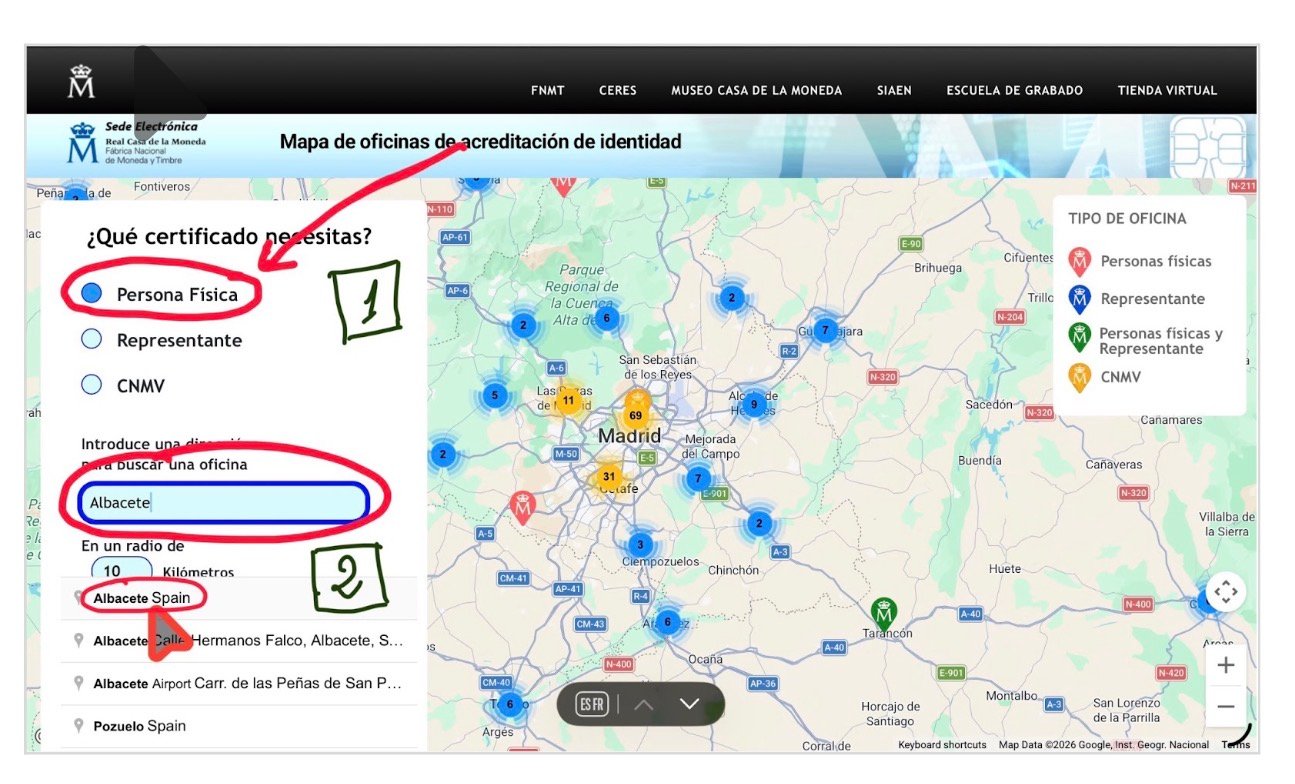
يمكنك البحث عن أقرب مكتب إلى مكان إقامتك عبر محدِّد المكاتب على الخريطة. أدخِل اسم بلديّتك في خانة البحث.
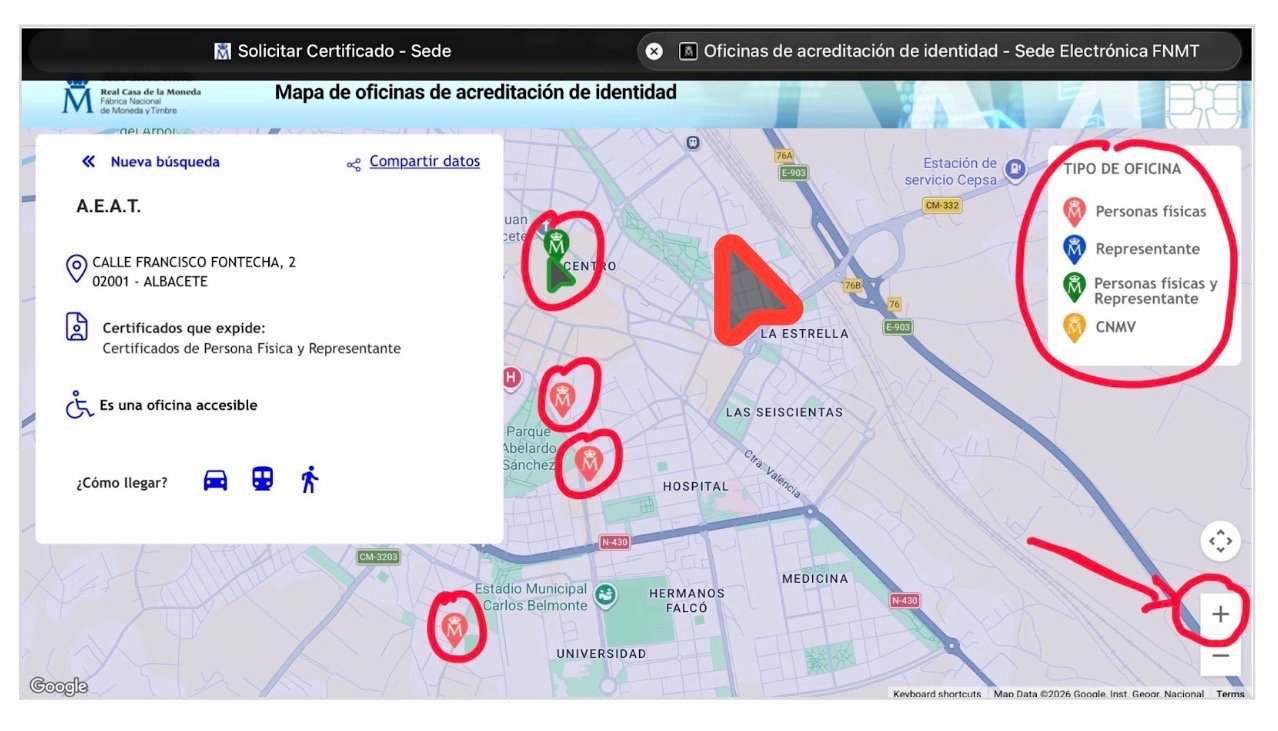
خريطة مكاتب التحقّق من الهويّة | المصدر: sede.fnmt.gob.es
بعد اختيار البلديّة، ستظهر الخريطة مع المكاتب المتاحة. في مدينة ألباسيتي مثلاً، تظهر أربعة مكاتب تحقّق في مواقع مختلفة. بالنقر على كلٍّ منها تظهر الجهة المعنيّة وعنوانها الدقيق وطريقة الوصول إليها. ضع في اعتبارك أنّ مكاتب مصلحة الضرائب (AEAT / Hacienda) والضمان الاجتماعيّ (Seguridad Social) تشترط موعداً مسبقاً. استفسر من المكتب المعنيّ قبل التوجّه إليه.
خريطة مكاتب التحقّق — مثال مدينة ألباسيتي | المصدر: sede.fnmt.gob.es
أحضر معك:
رمز الطلب (الذي وصلك بالبريد الإلكترونيّ).
جواز سفرك.
وإحدى هذه الوثائق التي تتضمّن NIE:
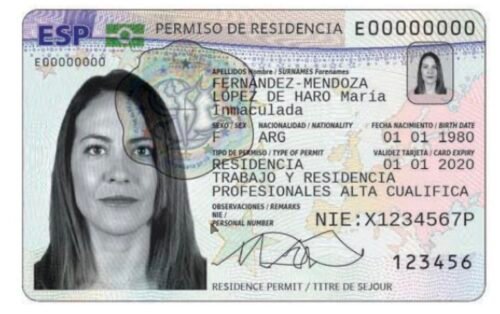
TIE (بطاقة تعريف الأجانب).
مثال على TIE | المصدر: policia.es
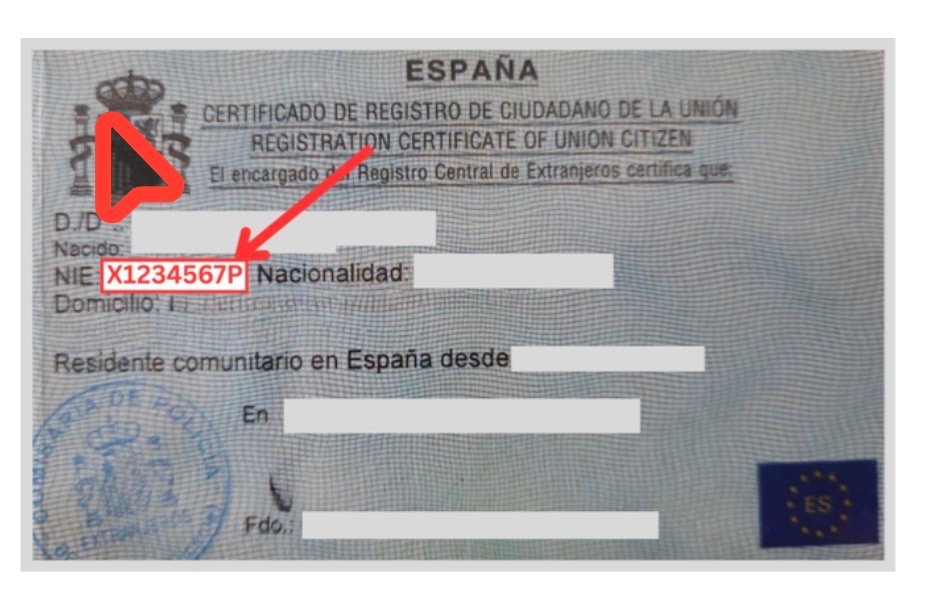
شهادة مواطن الاتّحاد الأوروبيّ التي تتضمّن NIE (في حالة الرعايا البريطانيّين مثلاً).
مثال على وثيقة إسناد NIE | المصدر: وثيقة حقيقيّة، بيانات شخصيّة مُجَهَّلة من قِبَل intercultural.info
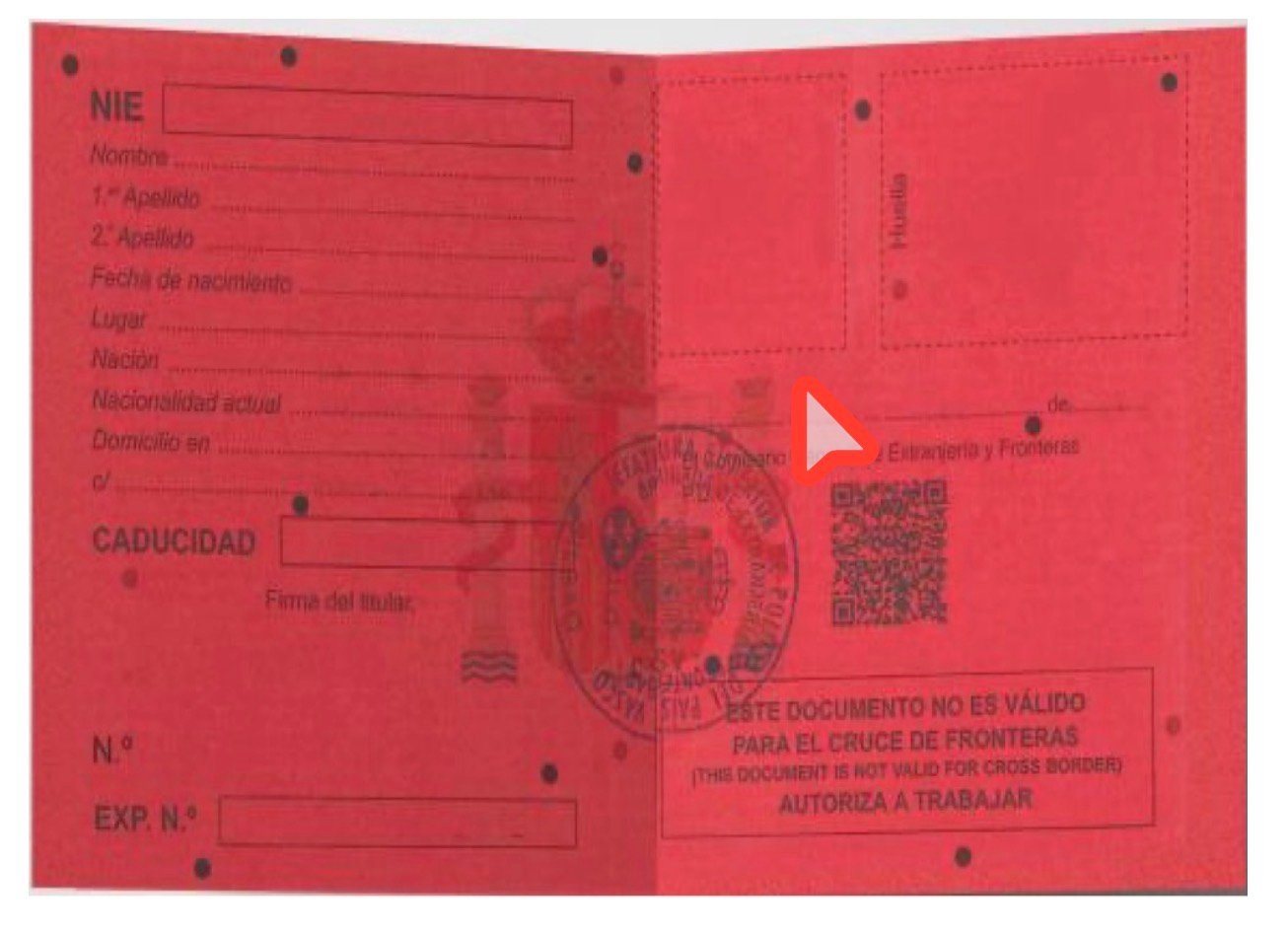
البطاقة الحمراء أو الخضراء أو البيضاء لتعريف طالبي الحماية الدوليّة أو اللجوء.
مثال على البطاقة الحمراء | المصدر: Euskadi.eus (حكومة إقليم البلاد الباسكيّة)
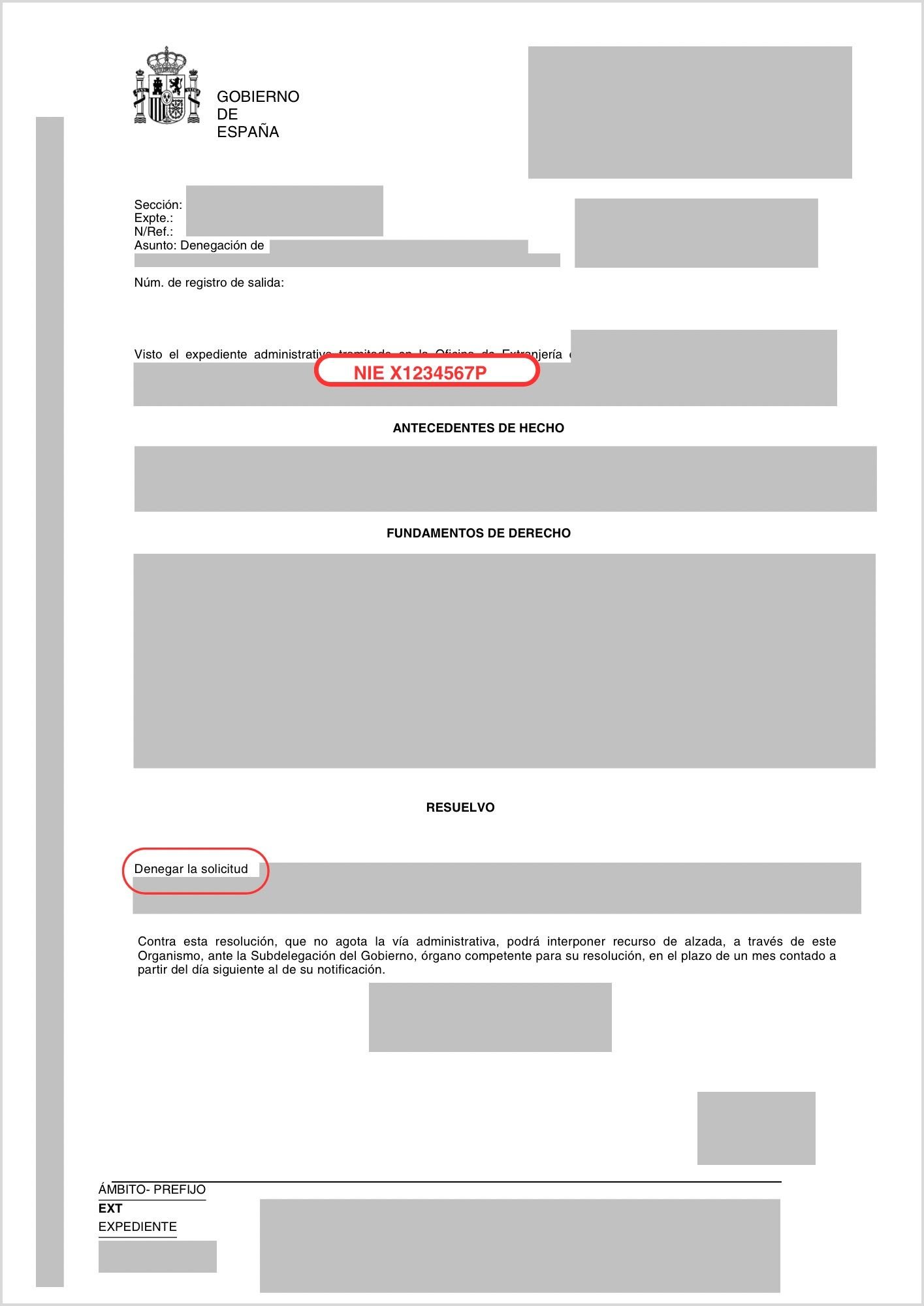
الوثيقة الرسميّة لإسناد NIE (في غياب هذه الوثيقة أو أيٍّ ممّا سبق، يمكن المحاولة بوثيقة أخرى تتضمّن NIE، كقرار صادر عن إدارة الأجانب، موافقاً كان أم مرفوضاً).
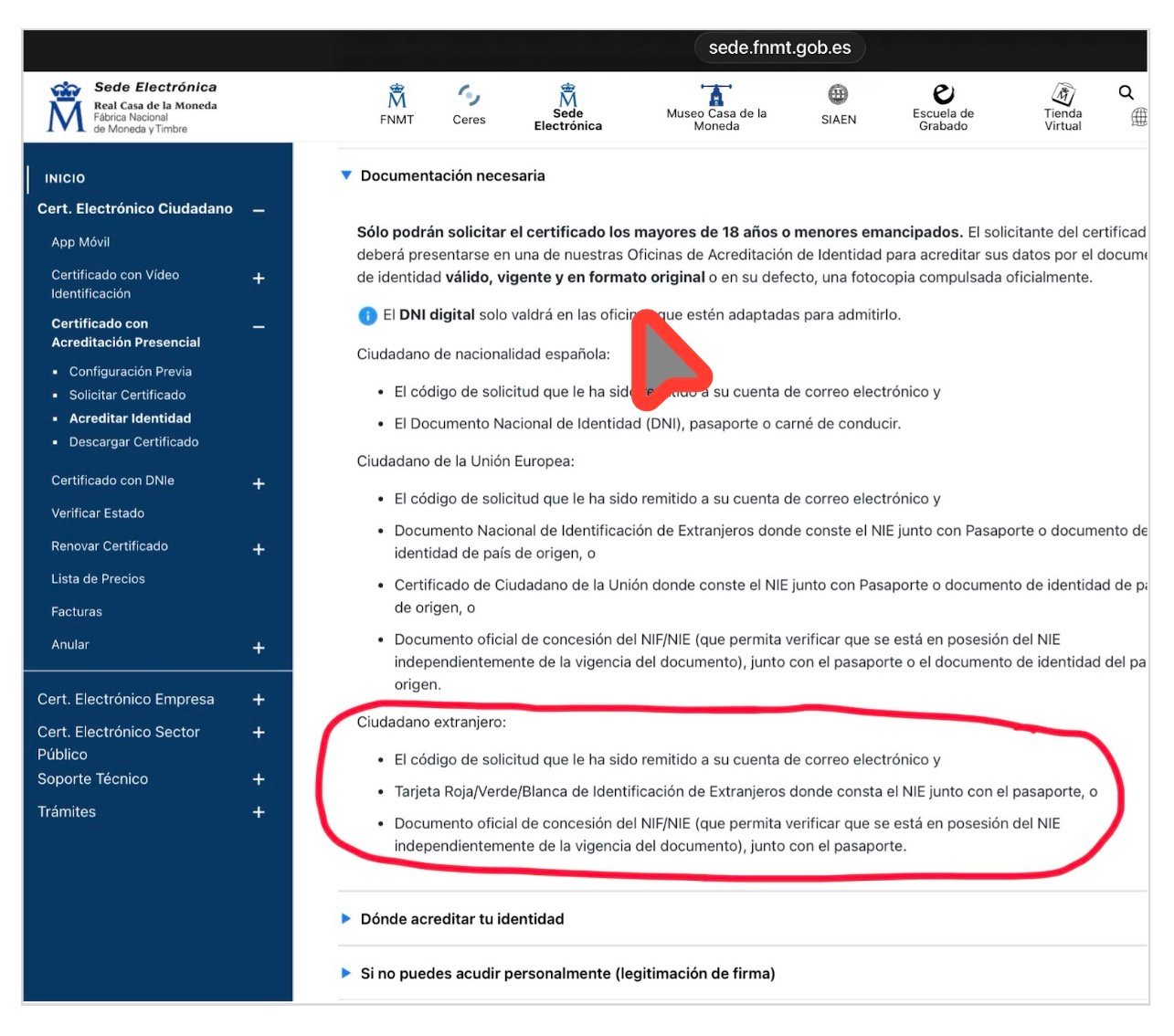
مثال على الوثيقة الرسميّة لإسناد NIE | المصدر: وثيقة حقيقيّة، بيانات شخصيّة مُجَهَّلة من قِبَل intercultural.infoمثال على قرار رفض يتضمّن NIE المُسنَد | المصدر: وثيقة حقيقيّة، بيانات شخصيّة مُجَهَّلة من قِبَل intercultural.infoالوثائق المطلوبة حسب نوع المتقدّم | المصدر: sede.fnmt.gob.es
معلومة أساسيّة: تُحدّد FNMT في بوّابتها الإلكترونيّة أنّها تقبل «الوثيقة الرسميّة المُثبِتة لـNIF/NIE المُمكِّنة من التحقّق من حيازة NIE، بصرف النظر عن تاريخ صلاحيّة الوثيقة»، إلى جانب جواز السفر.
ماذا إن لم تكن لديك هذه الوثيقة؟ في هذه الحالة يمكن المحاولة بأيّ وثيقة أخرى تتضمّن NIE — كقرار من إدارة الأجانب، موافقاً كان أم مرفوضاً. في الواقع العمليّ، قد تتباين التجربة من مكتبٍ لآخر: بعضها قد يقبل تلك الوثيقة؛ وبعضها قد يكون أكثر تشدّداً. ننصحك بالاستفسار من المكتب قبل التنقّل.
التعريف المرئيّ عن بُعد عبر FNMT غير متاح لحاملي NIE. هو متاح فقط لحاملي بطاقة التعريف الوطنيّة الإلكترونيّة DNIe (بطاقة التعريف الإسبانيّة الإلكترونيّة). إن كنت حاملاً لـNIE، فلا بدّ أن يكون التحقّق حضوريّاً.
الخطوة 4 — تنزيل الشهادة وتثبيتها وحفظ نسخة احتياطيّة
بعد التحقّق من هويّتك في المكتب، ستكون شهادتك جاهزةً للتنزيل. قد تتفاوت مدّة الانتظار من مكتب تحقّق لآخر.
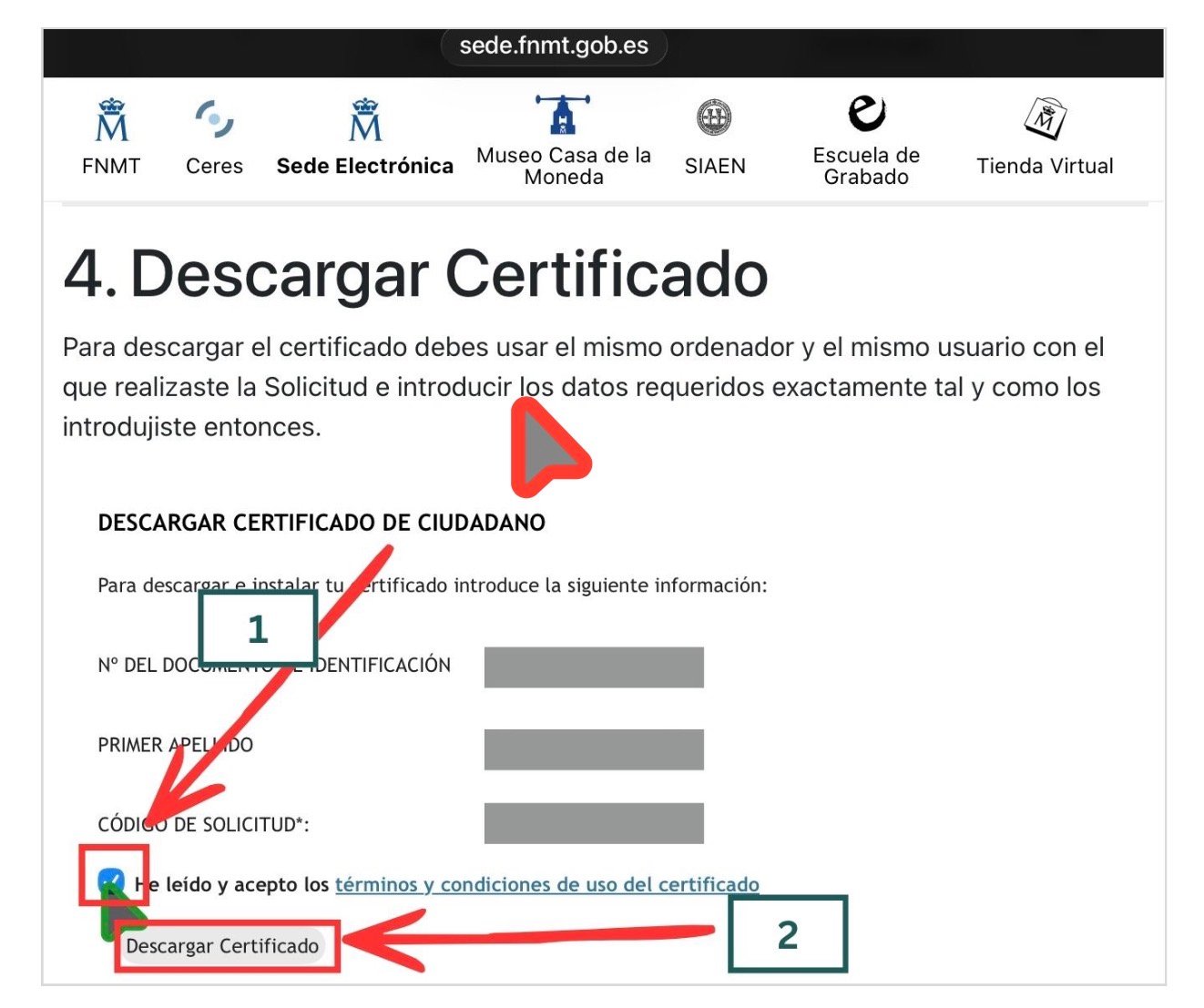
أدخِل NIE الخاصّ بك ولقبك الأوّل ورمز الطلب. اقرأ شروط الاستخدام وافق عليها، ثمّ انقر «تنزيل الشهادة». تذكّر: يجب إجراء ذلك من الحاسوب ذاته والمتصفّح ذاته وحساب المستخدم ذاته الذي قدّمت منه الطلب.
استمارة تنزيل الشهادة | المصدر: sede.fnmt.gob.es
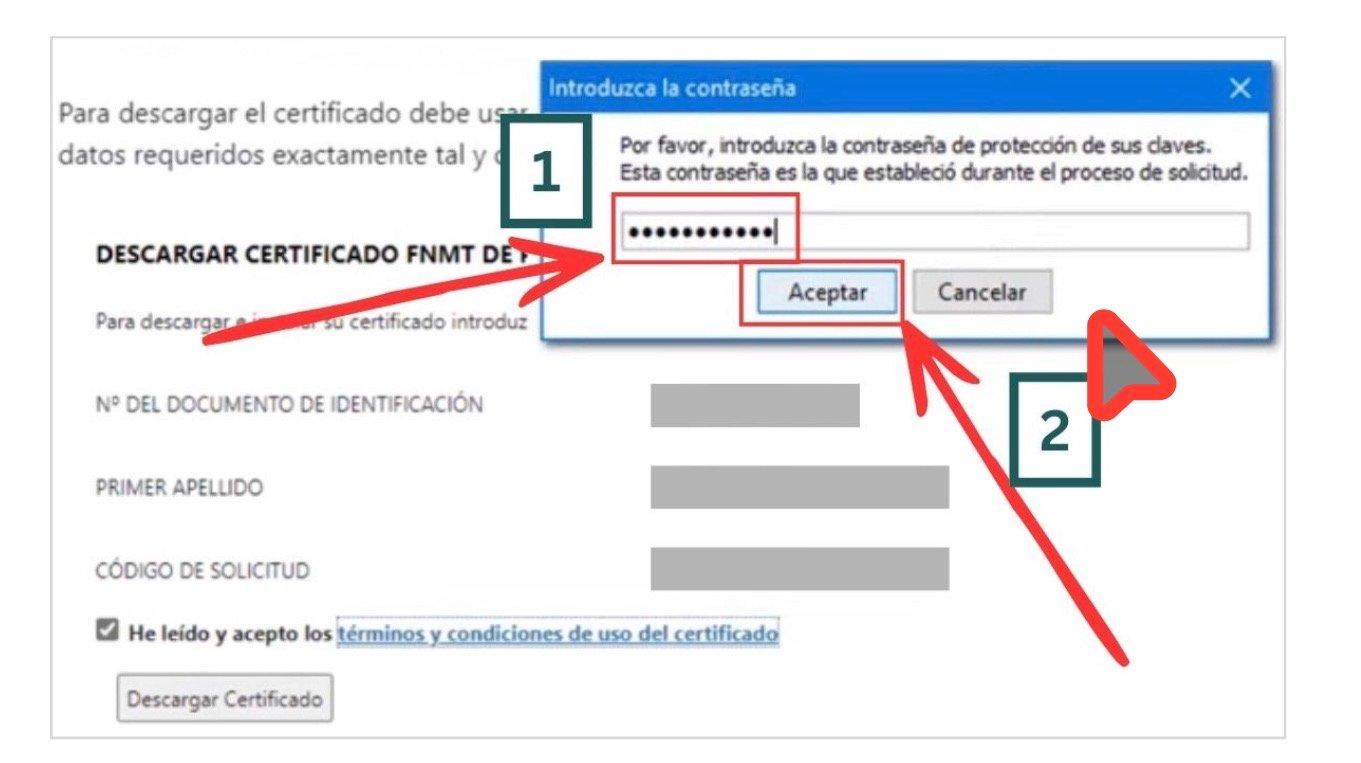
عند التنزيل، سيُطلب منك إدخال كلمة المرور التي أنشأتها في الخطوة 2.
نافذة كلمة المرور أثناء التنزيل | المصدر: sede.fnmt.gob.es (لقطة من فيديو AEAT التعليميّ)
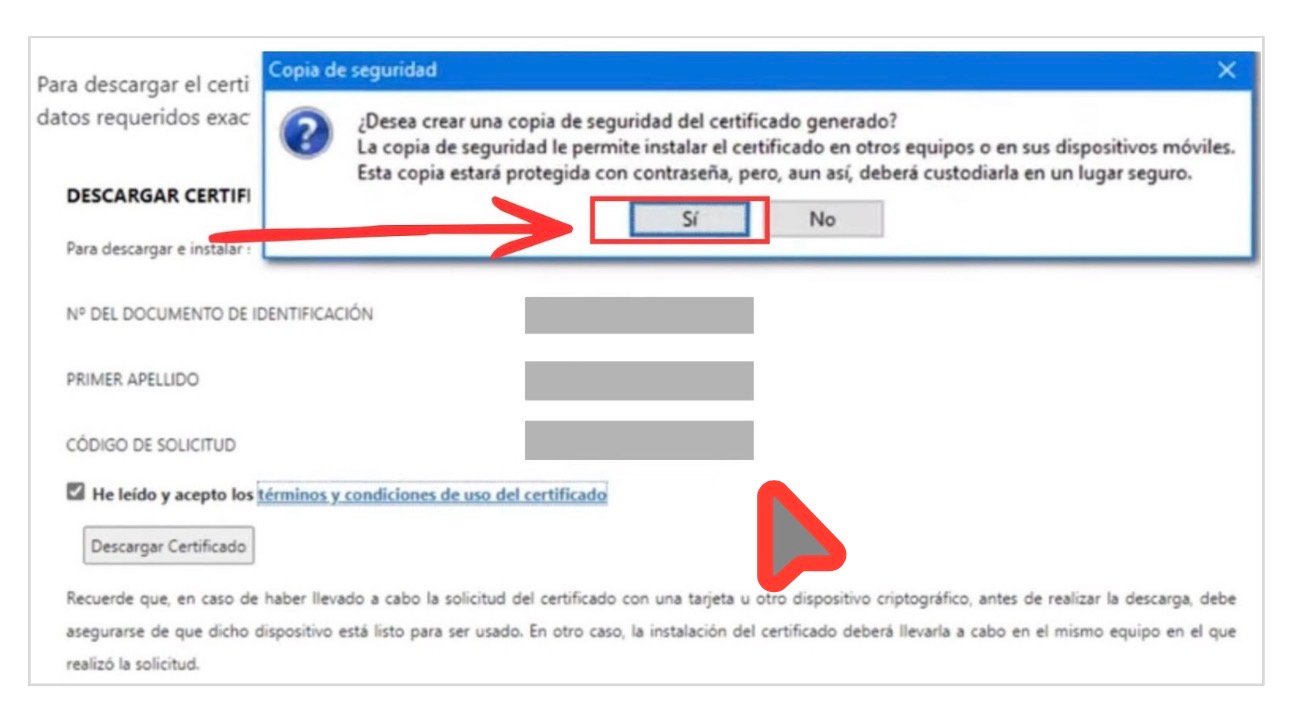
أثناء التنزيل، سيعرض عليك النظام حفظ نسخة احتياطيّة من الشهادة. وافق على ذلك. هذه الخطوة مهمّة: إن أعدتَ تهيئة الحاسوب أو انتقلتَ إلى جهاز آخر أو فقدَ المتصفّح الشهادات إثر تحديث، فستضطرّ دون نسخة احتياطيّة إلى تكرار العمليّة من البداية.
نافذة حفظ النسخة الاحتياطيّة | المصدر: sede.fnmt.gob.es (لقطة من فيديو AEAT التعليميّ)
انقر «نعم» لإنشاء النسخة الاحتياطيّة. احتفظ بالملفّ في مكان آمن: ذاكرة USB أو قرص صلب خارجيّ أو خدمة تخزين سحابيّة محميّة بكلمة مرور.
إن لم تظهر هذه النافذة، يمكنك تصدير الشهادة يدويّاً:
في Chrome أو Edge: اذهب إلى الإعدادات › الخصوصيّة والأمان › الأمان › إدارة الشهادات. اختر شهادتك وصدِّرها مع المفتاح الخاصّ.
في Firefox: اذهب إلى الإعدادات › الخصوصيّة والأمان › الشهادات › عرض الشهادات. في تبويب «شهاداتك»، اختر شهادتك وانقر «إنشاء نسخة احتياطيّة».
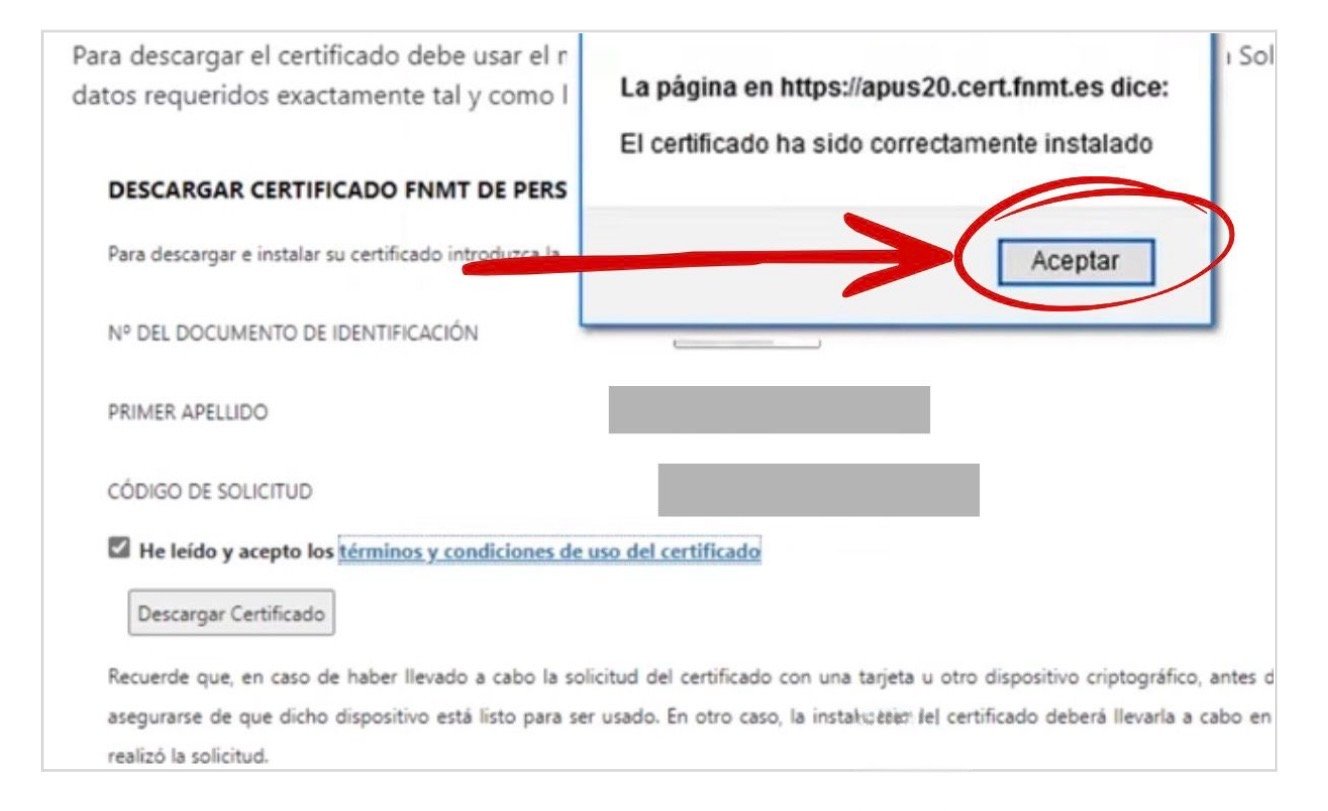
بعد اكتمال العمليّة، ستظهر لك رسالة تُؤكّد تثبيت الشهادة بنجاح.
للتأكّد من أنّ certificado digital (الشهادة الرقميّة) مُثبَّتة بشكل صحيح، ادخل إلى الملفّ الإلكترونيّ للمواطَنة (Carpeta ciudadana): sede.administracion.gob.es/carpeta/clave.htm. اختر خيار الدخول بالشهادة الإلكترونيّة. إن تمكّنت من الدخول ورأيت بياناتك، فالشهادة تعمل.
والتسوية الاستثنائيّة 2026؟
إن كنتَ في انتظار التسوية الاستثنائيّة 2026، فإنّ certificado digital (الشهادة الرقميّة) قد تكون ذات أهمّيّة بالغة. المسوّدات المتداولة تُشير إلى أنّ أحد قنوات تقديم الطلبات قد يكون إلكترونيّاً عبر منصّة Mercurio. وإن تأكّد ذلك، فإنّ توفّر certificado digital (الشهادة الرقميّة) أو نظام توقيع إلكترونيّ صالح قد يُحدث فارقاً عمليّاً حقيقيّاً.
⚠️ في انتظار التأكيد في BOE (الجريدة الرسميّة)
حتّى 25 مارس 2026، لم يُنشَر بعد Real Decreto (المرسوم الملكيّ) الذي سيُنظّم التسوية الاستثنائيّة في BOE (الجريدة الرسميّة). التفاصيل المتعلّقة بقناة تقديم الطلبات ستُؤكَّد عند نشر النصّ النهائيّ.
عند نشر Real Decreto (المرسوم الملكيّ)، سننشر دليلاً تفصيليّاً خاصّاً بكيفيّة تقديم الطلب عبر منصّة Mercurio. في الأثناء، الأحكم هو أن تكون شهادتك الرقميّة جاهزة.
«لا يسمح لي الموقع بتقديم طلب الشهادة.» تحقّق من أنّك ثبَّتَّ Configurador FNMT-RCM وأنّك تستخدم متصفّحاً متوافقاً ومحدَّثاً. بعض برامج مكافحة الفيروسات أو خوادم الوكيل (proxy) قد تحجب البرنامج: عطِّلها مؤقّتاً إن اقتضى الأمر.
«يطلب منّي كلمة مرور لا أتذكّرها.» كلمة المرور تُنشأ عند تقديم الطلب (الخطوة 2) ولا يمكن استرجاعها. إن نسيتَها، ستضطرّ إلى تقديم طلب جديد من البداية.
«المكتب لا يقبل وثيقتي.» قد تتباين التجربة من مكتبٍ لآخر. إن لم يقبل المكتب البديل عن الوثيقة الرسميّة لإسناد NIE، جرِّب مكتب تحقّق آخر (انظر البدائل في الخطوة 3). يمكنك أيضاً الاستفسار من بلديّتك، إذ تتعاون بعض البلديّات مع جهات إصدار شهادات يمكنها توجيهك.
«نزَّلتُ الشهادة لكنّها لا تعمل.» تأكّد من أنّك استخدمتَ الحاسوب ذاته والمتصفّح ذاته وحساب المستخدم ذاته الذي قدَّمتَ منه الطلب. إن غيَّرتَ أيّاً من ذلك في المرحلة الوسيطة، فقد تحتاج إلى إعادة العمليّة من البداية.
إن وصلتَ إلى هنا وأنجزتَ جميع الخطوات: مبروك. أصبح لديك الآن أداة تسمح لك بالوصول المباشر إلى الإدارة الإسبانيّة من المنزل، دون طوابير انتظار وبقدر أكبر من الاستقلاليّة. استخدمها. وإن كنتَ تعرف أحداً قد يحتاجها، شارك هذا الدليل معه.
تنويه قانونيّ: هذا المحتوى ذو طابع إعلاميّ ولا يُشكّل استشارةً قانونيّة. ستُؤكَّد المتطلّبات النهائيّة عند نشر المرسوم الرسميّ في BOE (الجريدة الرسميّة). للحالات الفرديّة، استشر متخصّصاً في قانون الإقامة.
Este tutorial te guía paso a paso para obtener el certificado digital de la FNMT (Fábrica Nacional de Moneda y Timbre). Es gratuito y te permite gestionar trámites de extranjería y otros muchos trámites con la administración española por internet.
Si quieres entender mejor qué es el certificado digital, para qué sirve y qué relación tiene con la regularización extraordinaria 2026, te recomendamos leer nuestro artículo completo: Certificado digital para personas extranjeras en España.
⚠️ ¿Estás pendiente de la regularización extraordinaria 2026?
Si la vía de presentación telemática se confirma en el BOE, necesitarás certificado digital o un sistema de firma electrónica para presentar tu solicitud a través de Mercurio — o que alguien lo haga en tu nombre. Más abajo explicamos la conexión (ver sección «¿Y la regularización extraordinaria 2026?»).
Si tienes NIE (Número de Identificación de Extranjero/a) — aunque no tengas permiso de residencia en vigor ni TIE —, puedes obtener este certificado. Más abajo te explicamos qué documentos acepta la FNMT.
¿Y si no tienes NIE? Este tutorial también te interesa. Si tienes un familiar, una amiga, un amigo o cualquier persona de confianza con permiso de residencia o nacionalidad española, esa persona puede obtener su propio certificado digital y presentar algunas solicitudes en tu nombre como representante si el trámite lo permite. Saber cómo funciona el proceso te ayudará a prepararte.
Este tutorial sigue los mismos pasos que explica la Agencia Tributaria (AEAT) en su vídeo oficial sobre cómo obtener un certificado electrónico de la FNMT. Algunas de nuestras capturas proceden de ese vídeo. Los procedimientos de la administración pueden cambiar con el tiempo; hemos verificado que este proceso es el vigente a fecha de publicación de este tutorial.
Qué necesitas antes de empezar
Antes de iniciar el proceso, asegúrate de tener:
Tu NIE y un documento que lo acredite (ver más abajo qué documentos acepta la FNMT), junto con tu pasaporte.
Un ordenador (PC, Mac o Linux). El proceso completo debe hacerse desde el mismo equipo, el mismo usuario y el mismo navegador.
Una dirección de correo electrónico a la que tengas acceso.
Un navegador actualizado: Mozilla Firefox, Google Chrome, Microsoft Edge, Opera o Safari.
Importante: no formatees el ordenador ni cambies de navegador o de usuario del sistema operativo durante el proceso. Todo debe hacerse desde el mismo equipo de principio a fin.
La apariencia de algunas ventanas puede ser diferente a las capturas de pantalla que mostramos en este tutorial, en función del sistema operativo que tengas en tu ordenador.
Paso 1 — Instala el software de la FNMT
Antes de solicitar el certificado, necesitas instalar un pequeño programa llamado Configurador FNMT-RCM. Este software genera las claves de seguridad necesarias para tu certificado. Funciona en Windows, Mac y Linux.
Página de configuración previa de la FNMT | Fuente: sede.fnmt.gob.es
Selecciona el enlace de descarga correspondiente a tu sistema operativo (Windows, Mac o Linux) y sigue los pasos del asistente de instalación.
Selección del sistema operativo para la descarga del Configurador | Fuente: sede.fnmt.gob.es
En Mac, es posible que necesites autorizar la instalación desde Ajustes del sistema › Privacidad y Seguridad. Una vez instalado, no tienes que abrirlo manualmente: se ejecutará solo cuando el navegador lo necesite.
Asistente de instalación del Configurador FNMT-RCM (Windows) | Fuente: sede.fnmt.gob.es (captura del vídeo tutorial AEAT)
Te recomendamos instalar también la aplicación AutoFirma, que muchas páginas de la administración necesitan para funcionar con el certificado, como es el caso de la plataforma Mercurio, por donde se presentan muchas solicitudes telemáticas de extranjería. Puedes descargarla desde firmaelectronica.gob.es.
Tu NIE (9 caracteres, rellenando con ceros a la izquierda si es necesario).
Tu primer apellido, exactamente como aparece en tu documento de identidad.
Tu dirección de correo electrónico.
Formulario de solicitud del certificado digital | Fuente: sede.fnmt.gob.es (captura del vídeo tutorial AEAT)
En el formulario, cumplimenta los cuatro campos:
Campo 1: número de documento de identificación (NIE en el caso de personas extranjeras sin la nacionalidad española)
Campo 2: primer apellido
Campo 3: correo electrónico
Campo 4: repetir el mismo correo electrónico
Lee y acepta las condiciones de uso. Al hacer clic en «Enviar petición», el navegador te pedirá permiso para abrir el Configurador FNMT. En la ventana que aparezca, haz clic en «Abrir». Si te ofrece la opción de permitir siempre el acceso, márcala.
Permiso del navegador para abrir el Configurador FNMT | Fuente: sede.fnmt.gob.es (captura del vídeo tutorial AEAT)
A continuación, el sistema te pedirá crear una contraseña para proteger las claves de tu certificado. Guárdala bien: la necesitarás para descargar el certificado y no se puede recuperar. Esta misma contraseña se usará también para la copia de seguridad.
Diálogo de creación de contraseña | Fuente: sede.fnmt.gob.es (captura del vídeo tutorial AEAT)
Si todo ha ido bien, verás un mensaje de confirmación con tus datos.
Confirmación de solicitud procesada correctamente | Fuente: sede.fnmt.gob.es (captura del vídeo tutorial AEAT)
Recibirás un correo electrónico con tu código de solicitud. Anótalo o imprímelo: lo necesitas en la oficina y para la descarga.
Correo electrónico de la FNMT con el código de solicitud | Fuente: sede.fnmt.gob.es (captura del vídeo tutorial AEAT)
Paso 3 — Acredita tu identidad en una oficina
Ahora necesitas ir en persona a una Oficina de Acreditación de Identidad para verificar que eres tú quien ha solicitado el certificado. La FNMT tiene más de 2.400 oficinas en toda España: oficinas de la Seguridad Social, de la Agencia Tributaria (AEAT), ayuntamientos y otros organismos.
Página «3. Acreditar Identidad» de la sede FNMT | Fuente: sede.fnmt.gob.es
Usando el localizador de oficinas puedes encontrar la más cercana a tu domicilio. Introduce tu localidad en el buscador.
Mapa de oficinas de acreditación de identidad | Fuente: sede.fnmt.gob.es
Una vez la localidad seleccionada, aparecerá el mapa con las oficinas disponibles. En el caso de Albacete, por ejemplo, aparecen cuatro oficinas de acreditación en diferentes ubicaciones. Pinchando en cada una se muestra el organismo específico, su dirección exacta y cómo llegar. Ten en cuenta que en las oficinas de la AEAT y de la Seguridad Social se necesita cita previa. Consulta con la propia oficina antes de ir.
Mapa de oficinas de acreditación de identidad — ejemplo de Albacete | Fuente: sede.fnmt.gob.es
Lleva contigo:
Tu código de solicitud (el que recibiste por correo).
Tu pasaporte.
Y uno de estos documentos con tu NIE:
TIE (Tarjeta de Identidad de Extranjero/a).
Ejemplo de TIE | Fuente: policia.es
Certificado de Ciudadano de la Unión donde conste tu NIE (en el caso de la población británica, por ejemplo).
Ejemplo del documento de concesión de NIE | Fuente: Documento real, datos personales anonimizados por intercultural.info
Tarjeta Roja, Verde o Blanca de identificación de extranjeros.
Ejemplo de Tarjeta Roja | Fuente: Euskadi.eus (Gobierno Vasco)
Documento oficial de concesión del NIE (en ausencia de este documento o de cualquiera de los anteriores, se podría probar con otra alternativa que contenga el NIE, por ejemplo una resolución de Extranjería, sea favorable o denegatoria).
Ejemplo del documento oficial de concesión de NIE | Fuente: Documento real, datos personales anonimizados por intercultural.infoEjemplo de resolución denegatoria con NIE asignado | Fuente: Documento real, datos personales anonimizados por intercultural.infoDocumentación requerida por tipo de ciudadano (página FNMT) | Fuente: sede.fnmt.gob.es
Dato clave: la FNMT especifica en su sede electrónica que acepta un «documento oficial de concesión del NIF/NIE que permita verificar que se está en posesión del NIE, independientemente de la vigencia del documento», junto con el pasaporte.
¿Qué pasa si no tienes ese documento de concesión del NIE? En ese caso se podría probar con algún otro documento que contenga el NIE — como una resolución de Extranjería, sea favorable o denegatoria. En la práctica, la experiencia puede variar según la Oficina de Acreditación. Algunas aceptarían ese documento; otras podrían ser más estrictas. Te recomendamos consultar con la oficina antes de desplazarte.
La vídeoidenficación de la FNMT NO está disponible para personas con NIE. Solo se puede hacer con DNI electrónico (DNIe). Si tienes NIE, la acreditación tiene que ser presencial.
Paso 4 — Descarga, instala y haz copia de seguridad
Después de acreditar tu identidad en la oficina, tu certificado estará disponible para descargar. El tiempo de espera puede variar en función de la oficina de acreditación a la que acudas.
Introduce tu NIE, tu primer apellido y el código de solicitud. Lee y acepta las condiciones de uso, y pulsa «Descargar Certificado». Recuerda: tienes que hacerlo desde el mismo ordenador, el mismo navegador y el mismo usuario que usaste para solicitar.
Formulario de descarga del certificado | Fuente: sede.fnmt.gob.es
Al descargar, se te pedirá la contraseña que creaste en el Paso 2.
Diálogo de contraseña durante la descarga | Fuente: sede.fnmt.gob.es (captura del vídeo tutorial AEAT)
Durante la descarga, el sistema te ofrecerá hacer una copia de seguridad del certificado. Acepta. Este paso es importante: si formateas el ordenador, cambias de equipo o el navegador se actualiza y pierde los certificados, sin copia de seguridad tendrías que repetir todo el proceso desde cero.
Diálogo de copia de seguridad del certificado | Fuente: sede.fnmt.gob.es (captura del vídeo tutorial AEAT)
Haz clic en «Sí» para crear la copia de seguridad. Guarda el archivo en un lugar seguro: un USB, un disco externo o un servicio en la nube con contraseña.
Si no te aparece ese diálogo, también puedes exportar el certificado manualmente:
En Chrome o Edge: ve a Configuración › Privacidad y seguridad › Seguridad › Gestionar certificados. Selecciona tu certificado y expórtalo con la clave privada.
En Firefox: ve a Configuración › Privacidad y seguridad › Certificados › Ver certificados. En la pestaña «Sus certificados», selecciona el tuyo y haz clic en «Hacer copia».
Una vez completado el proceso, verás un mensaje confirmando la correcta instalación del certificado.
Confirmación: «El certificado ha sido correctamente instalado» | Fuente: sede.fnmt.gob.es (captura del vídeo tutorial AEAT)
Paso 5 — Comprueba que funciona
Para verificar que tu certificado está correctamente instalado, accede a Mi Carpeta Ciudadana: sede.administracion.gob.es/carpeta/clave.htm. Selecciona la opción de acceso con certificado electrónico. Si entras correctamente y ves tus datos, el certificado funciona.
¿Y la regularización extraordinaria 2026?
Si estás pendiente de la regularización extraordinaria 2026, el certificado digital puede ser especialmente importante. Los borradores que han circulado apuntan a que una vía de presentación de solicitudes podría ser telemática, a través de la plataforma Mercurio. Si esa vía se confirma, disponer de certificado digital o de un sistema válido de firma electrónica podría marcar una diferencia práctica real.
⚠️ Pendiente de confirmación en el BOE
A 25 de marzo de 2026, el Real Decreto que regulará la regularización extraordinaria aún no ha sido publicado en el BOE. Los detalles sobre el canal de presentación de solicitudes se confirmarán cuando el texto definitivo se publique.
Cuando el Real Decreto se publique, generaremos un tutorial específico sobre cómo presentar la solicitud a través de Mercurio. Mientras tanto, lo más prudente es tener el certificado digital listo.
«No me deja solicitar el certificado en la web.» Comprueba que has instalado el Configurador FNMT-RCM y que estás usando un navegador compatible y actualizado. Algunos antivirus o proxies pueden bloquear la aplicación: desactívalos temporalmente si es necesario.
«Me pide una contraseña y no la recuerdo.» La contraseña se crea durante la solicitud (Paso 2) y no se puede recuperar. Si la has olvidado, tendrás que iniciar una nueva solicitud desde el principio.
«En la oficina no me aceptan mi documento.» La experiencia puede variar según la oficina. Si no te aceptan tu alternativa al documento oficial de concesión de NIE, prueba en otra Oficina de Acreditación de Identidad (ver alternativas en el Paso 3). También puedes consultar con tu ayuntamiento, ya que algunos colaboran con entidades certificadoras y pueden orientarte.
«He descargado el certificado pero no funciona.» Asegúrate de que has usado el mismo ordenador, el mismo navegador y el mismo usuario que en la solicitud. Si cambiaste algo entre medias, es posible que necesites repetir el proceso.
Si has llegado hasta aquí y has completado todos los pasos: enhorabuena. Ahora tienes una herramienta que te da acceso directo a la administración española desde tu casa, sin colas y con mucha más autonomía. Úsala. Y si conoces a alguien que pueda necesitarla, comparte este tutorial.
Aviso legal: Este contenido tiene carácter informativo y no constituye asesoramiento jurídico. Los requisitos definitivos se confirmarán con la publicación en el BOE. Para situaciones individuales, consulta con un profesional habilitado en extranjería.
Existe una herramienta muy útil que muchas personas extranjeras en España pueden obtener de forma gratuita, que les permite gestionar sus trámites de extranjería entre otros muchos trámites, desde casa, sin colas, sin citas imposibles de conseguir y con mucha autonomía. Se llama certificado digital, y una gran parte de quienes más lo necesitan no saben que existe.
En este artículo te explicamos qué es, qué problemas resuelve, por qué tan pocos profesionales hablan de él y qué tiene que ver con la regularización extraordinaria 2026.
▶ Tutorial paso a paso: Cómo obtener tu certificado digital
Piensa en la última vez que tuviste que hacer un trámite con la administración española (y si nunca lo has hecho, pregunta a cualquier persona inmigrada de tu entorno con esa experiencia). Quizás pediste cita y tardaste semanas en conseguirla. Quizás pagaste a alguien para que te lo hiciera. Quizás el asunto lleva meses sin resolverse porque no sabes cómo consultar el estado de tu expediente, ni cómo aportar un documento que te han pedido.
Esto no debería ser así. La administración española lleva años digitalizando sus servicios. Hoy, gran parte de los trámites ya se pueden hacer por internet. El problema es que para hacerlos hace falta una cosa: identificarse digitalmente. Y sin ese paso, la persona queda atrapada en un sistema diseñado para quienes ya tienen sus papeles en regla.
El certificado digital puede ser ese paso. Con él, una persona extranjera puede acceder a muchos servicios de la administración pública española sin desplazarse y con mucha más autonomía.
Por qué casi nadie habla de esto
Si buscas en YouTube información sobre trámites de extranjería, encontrarás decenas de canales explicando arraigos, renovaciones o la regularización extraordinaria. Pero muy pocos hablan del certificado digital para personas migradas. Y los que lo hacen, raramente mencionan que sirve para presentar solicitudes de extranjería en nombre propio o en representación de otras personas.
Sin entrar en especulaciones sobre las intenciones de cada profesional, podemos decir que hay varias razones por las que este tema se explica poco. Una de ellas es que muchas guías se centran en el trámite final, pero no en la herramienta que permite hacerlo por internet. Otra es que la identificación electrónica sigue pareciendo compleja a muchas personas, cuando con una explicación clara suele ser bastante más manejable de lo que parece.
intercultural.info existe precisamente para romper esa dinámica.
¿Para qué sirve el certificado digital en la vida real de una persona extranjera?
Con un certificado digital, una persona extranjera puede, entre otras cosas:
Presentar solicitudes de extranjería (regularización, arraigo, reagrupación familiar, renovaciones, etc.) de forma telemática a través de Mercurio
Consultar el estado de su expediente de extranjería y descargar resoluciones y notificaciones
Aportar documentación a un expediente ya abierto, sin necesidad de acudir presencialmente
Solicitar el certificado de empadronamiento en aquellos ayuntamientos que lo permiten de forma telemática
Obtener el informe de vida laboral y otros documentos de la Seguridad Social
Realizar gestiones con la Agencia Tributaria (declaración de la renta, certificados tributarios)
Solicitar la nacionalidad española
Solicitar la homologación o reconocimiento de títulos obtenidos en el extranjero
Acceder a Mi Carpeta Ciudadana, el portal unificado de la administración española
Firmar documentos con plena validez legal, sin necesidad de notario
En resumen: el certificado digital convierte a la persona en un sujeto activo frente a la administración, capaz de gestionar sus propios asuntos sin necesariamente depender de intermediarios ni de citas en muchas ocasiones muy difíciles de conseguir.
¿Qué es la identificación electrónica y cuáles son tus opciones?
La identificación electrónica es la forma de demostrar ante la administración que eres tú, por internet, de manera segura. En España existen varios sistemas:
Certificado digital (FNMT): el más completo y el que recomendamos. Es gratuito, válido en toda la administración española y te permite no solo identificarte, sino también firmar documentos con plena validez legal. Lo emite la Fábrica Nacional de Moneda y Timbre (FNMT). Es el sistema más completo y, en la práctica, el más útil para muchos trámites telemáticos de extranjería, incluida la presentación de solicitudes en Mercurio cuando el procedimiento admite esa vía.
Cl@ve Permanente con Cl@ve Firma: una alternativa válida para identificarte y también para firmar. Requiere un proceso de registro presencial o con videoidentificación. Con Cl@ve Firma activada, puede utilizarse para firmar determinados trámites electrónicos y puede ser una alternativa válida según el procedimiento.
Cl@ve PIN: sistema básico de identificación. Sirve para consultar expedientes e identificarte ante la administración, pero no permite firmar solicitudes. Útil para consultas; sirve para identificarte en algunos servicios, pero por sí sola no suele bastar cuando el trámite exige firma electrónica.
Certificados de comunidades autónomas y otras entidades: además de la FNMT, existen otras entidades certificadoras reconocidas por el Estado español: ACCV (Comunitat Valenciana), Izenpe (País Vasco), CATCert (Catalunya) o las Cámaras de Comercio a través de Camerfirma, entre otras. Todos son válidos para trámites con la administración. En algunas zonas, obtenerlo a través del propio ayuntamiento o de estas entidades puede resultar más accesible que hacerlo vía FNMT.
Formas de identificarse ante la administración española: certificado digital, Cl@ve y DNI electrónico | Fuente: carpetaciudadana.gob.es (acceso mediante pasarela Cl@ve)
En este artículo nos centramos en el certificado digital de la FNMT por ser el más universal, gratuito y accesible en todo el territorio nacional.
NIE, autorización de residencia y TIE: tres cosas distintas — y por qué este artículo también te interesa aunque no tengas los papeles en regla
Antes de hablar de quién puede obtener el certificado digital, conviene aclarar tres conceptos que generan mucha confusión:
NIE (Número de Identidad de Extranjero/a): es un número de identificación — no un documento ni un permiso. Lo asigna la Policía Nacional cuando una persona extranjera inicia cualquier trámite formal con la administración española, o cuando se solicita expresamente ante la misma acreditando un interés legítimo (hay condiciones para ello). Una persona puede tener NIE aunque no tenga permiso de residencia en vigor, ni lo haya tenido nunca.
Ejemplo del documento de concesión de NIE | Fuente: Documento real, datos personales anonimizados por intercultural.info
Autorización (o permiso) de residencia: es el permiso administrativo que permite residir en España. Es distinto del NIE y de la TIE.
Ejemplo de resolución de concesión de la autorización de residencia | Fuente: Documento real, datos personales anonimizados por intercultural.info
TIE (Tarjeta de Identidad de Extranjero/a): es la expresión en formato de tarjeta de la autorización de residencia. Contiene el NIE, la foto y el tipo de permiso concedido.
Ejemplo de Tarjeta de Identidad de Extranjero/a (TIE) | Fuente: policia.es
¿Por qué importa esta distinción? Porque el certificado digital de la FNMT se puede obtener con NIE, aunque no tengas TIE ni permiso de residencia vigente. La propia FNMT especifica en su sede electrónica que es válido el «documento oficial de concesión del NIF/NIE que permita verificar que se está en posesión del NIE, independientemente de la vigencia del documento», junto con el pasaporte.
Dicho esto, en la práctica la experiencia puede variar según la Oficina de Acreditación. Algunas aceptarían un documento que contenga tu NIE — como una resolución de Extranjería, sea favorable o denegatoria. Otras podrían ser más estrictas. Te recomendamos consultar con la oficina antes de desplazarte. Si la vía de la FNMT no funciona en tu caso, en algunas zonas los ayuntamientos colaboran con entidades certificadoras reconocidas y pueden orientarte sobre otras alternativas.
⚠ Importante: ¿y si crees que no tienes NIE?
Muchas personas que presentaron solicitudes a Extranjería en el pasado — aunque hayan sido denegadas — tuvieron un NIE asignado. Ese número aparece en la resolución que les enviaron. Si guardas algún documento de Extranjería, búscalo: es posible que ya tengas NIE sin saberlo.
Si nunca has tenido un NIE asignado, eso no significa que este artículo no te sirva: entender cómo funciona la identificación electrónica puede ser útil si finalmente la regularización permite presentar la solicitud mediante representación.
Y si ahora mismo no tienes NIE, sigue leyendo igualmente: en un escenario de presentación telemática, puede ser importante saber no solo cómo funciona el certificado digital, sino también si el Real Decreto final permite que otra persona actúe en tu nombre con representación.
Ejemplo de resolución denegatoria con NIE asignado | Fuente: Documento real, datos personales anonimizados por intercultural.info
La regularización extraordinaria 2026 y el certificado digital
Si estás pendiente de la regularización extraordinaria 2026, el certificado digital adquiere una relevancia especial. A fecha de hoy (25 de marzo de 2026), el Real Decreto aún no ha sido publicado en el BOE, pero los borradores que han circulado apuntan a que una vía principal de presentación de solicitudes será telemática, a través de la plataforma Mercurio. Si el canal principal de presentación acaba siendo telemático, disponer de certificado digital o de un sistema válido de firma puede marcar una diferencia práctica importante — a menos que se recurra a un profesional, a una organización colaboradora registrada, o — y esto es importante aunque casi nadie lo explica — a una persona de confianza que pueda actuar como representante, si así lo confirma el Real Decreto definitivo (ver más adelante).
⚠ Información pendiente de confirmación en el BOE
Todo lo relativo al canal de presentación de solicitudes es provisional. Los detalles exactos — si será posible presentar directamente en Mercurio y de qué manera, qué documentos se admitirán, si el pasaporte caducado será válido, si se habilitarán otras vías — se confirmarán cuando el texto definitivo del Real Decreto se publique en el BOE.
Respecto de la vía presencial, todo apunta a que podría ser menos ágil que la telemática, pero los detalles concretos — oficinas, horarios, capacidad y procedimiento — siguen pendientes de confirmación oficial. Varias fuentes no oficiales apuntan en este sentido a que las oficinas habilitadas funcionarían en horario de tarde con disponibilidad limitada y un volumen de solicitudes muy alto.
La clave, en cualquier caso, es prepararse ahora. Quien llegue con el certificado digital listo el día que abra el plazo tendrá una ventaja real frente a quien no.
¿Puede otra persona presentar la solicitud telemática por ti?
Esta es quizás una de las informaciones más importantes que nadie explica. Y la respuesta es: probablemente sí, si esa persona tiene certificado digital y actúa como tu representante.
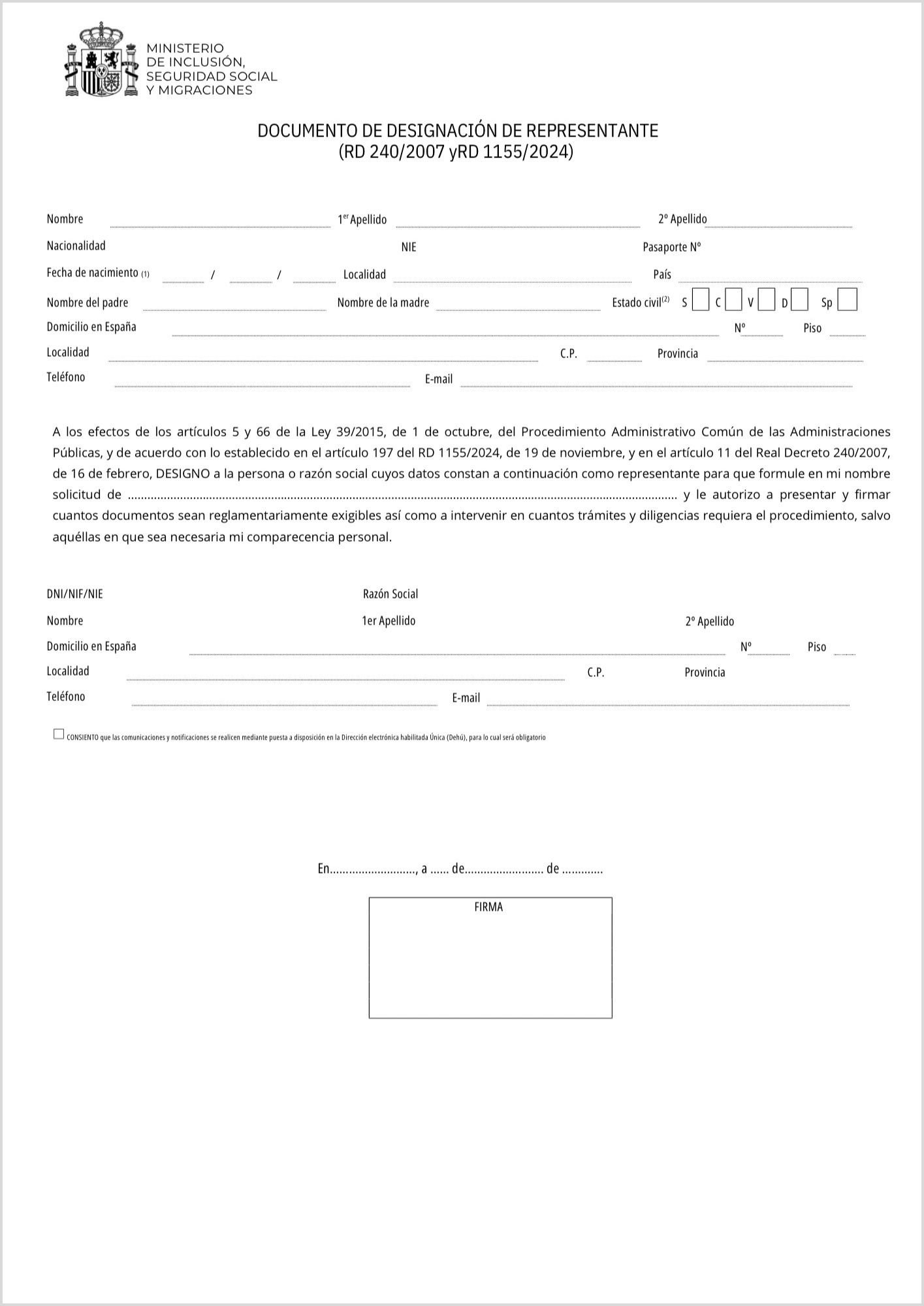
La Ley 39/2015, en su artículo 5, establece que cualquier persona puede actuar como representante de otra ante la administración pública española — no hace falta ser profesional registrado/a y habilitado/a para estos trámites. Basta con cumplimentar y presentar el documento de «designación de representante» (disponible en nuestra sección de Recursos) junto al resto de documentos, y con que la persona representante cuente con los medios electrónicos necesarios, es decir, con certificado digital.
(Fuente: Ministerio de Inclusión, Seguridad Social y Migraciones — inclusion.gob.es. Verifica que esta sea la versión vigente antes de usarla.)
Un ejemplo concreto:
Entre 2020 y 2022, miles de personas nacionales del Reino Unido en España necesitaban regularizar su situación tras el Brexit, en plena pandemia. Una proporción significativa de solicitudes se presentó telemáticamente a través de Mercurio en representación de estas personas — sin que dicha representación correspondiera a un/a profesional registrado/a, simplemente mediante el documento de designación de representante correspondiente. Esta experiencia demuestra que el mecanismo existe, funciona y ha sido utilizado a gran escala.
Formulario de designación de representante | Fuente: Ministerio de Inclusión, Seguridad Social y Migraciones — inclusion.gob.es
Si tienes un familiar, una amiga, un amigo o cualquier persona de confianza con permiso de residencia en España o nacionalidad española y que tiene (o puede obtener) un certificado digital, puede valer la pena que se prepare para poder ayudarte cuando llegue el momento. Pendiente de que el BOE lo confirme para la regularización extraordinaria, esta vía podría ser clave para muchas personas que no tienen identificación electrónica propia.
Qué hacer ahora mismo
Si tienes NIE: obtén tu certificado digital cuanto antes. Nuestro tutorial te explica cómo hacerlo paso a paso.
Si no sabes si tienes NIE: busca entre tus documentos cualquier resolución de Extranjería. Tu NIE puede estar ahí.
Si no tienes NIE: puedes solicitar la asignación directa de NIE ante la Policía Nacional o una Oficina de Extranjería, mediante el formulario EX-15 y abonando la tasa correspondiente. Ten en cuenta que este trámite exige cumplir ciertos requisitos, y que en situación irregular puede ser difícil obtenerlo. El plazo legal de resolución es de cinco días hábiles, aunque como en cualquier gestión administrativa los tiempos reales pueden variar. Si te lo deniegan, no es el fin del camino: las opciones siguientes aplican igualmente a ti.
Si tienes familiares o personas de confianza con documentación en regla: anímales a que obtengan su certificado digital. Si el BOE lo confirma, podrían presentar solicitudes en tu nombre como representantes.
Si no tienes NIE ni representante personal, hay otras vías: organizaciones de apoyo a personas migrantes registradas como entidades colaboradoras (ONGs y sindicatos inscritos en el Registro publicado en el BOE el 5 de marzo de 2026) pueden orientarte y ayudarte gratuitamente. Si decides recurrir a despachos profesionales, asegúrate de que estén colegiados y habilitados para estos trámites. La vía presencial también está disponible sin certificado digital.
Si ya tienes el certificado digital: úsalo para preparar documentación que necesites para la regularización, como un certificado de empadronamiento histórico que demuestre tu llegada y permanencia en España desde antes de enero de 2026, o bien el certificado de convivencia para demostrar lazos familiares directos, una de las situaciones de la segunda vía de regularización según los borradores que están circulando, tal como explicamos en nuestro artículo Regularización extraordinaria 2026 en España: qué se sabe, quién puede solicitarla y qué debes hacer ya.
▶ Tutorial paso a paso: Cómo obtener tu certificado digital
Pasos detallados, capturas de pantalla y explicaciones.
Aviso legal: Este contenido tiene carácter informativo y no constituye asesoramiento jurídico. Los requisitos definitivos de la regularización extraordinaria 2026 se confirmarán con la publicación en el BOE. Para situaciones individuales, consulta con un profesional habilitado en extranjería.
Il existe un outil très utile que de nombreuses personnes étrangères en Espagne peuvent obtenir gratuitement, et qui leur permet de gérer leurs démarches d’immigration, parmi beaucoup d’autres démarches, depuis chez elles, sans files d’attente, sans rendez-vous impossibles à obtenir et avec beaucoup plus d’autonomie. Cet outil s’appelle le certificat numérique, et une grande partie des personnes qui en ont le plus besoin ne savent même pas qu’il existe.
Dans cet article, nous vous expliquons ce que c’est, quels problèmes il résout, pourquoi si peu de professionnels en parlent et quel lien il a avec la régularisation extraordinaire 2026.
▶ Tutoriel pas à pas : Comment obtenir votre certificat numérique
Pensez à la dernière fois où vous avez dû faire une démarche auprès de l’administration espagnole, et si vous ne l’avez jamais fait, demandez à une personne immigrée de votre entourage qui a déjà vécu cette expérience. Peut-être avez-vous demandé un rendez-vous et attendu des semaines avant de l’obtenir. Peut-être avez-vous payé quelqu’un pour le faire à votre place. Peut-être que votre dossier n’est toujours pas résolu depuis des mois parce que vous ne savez pas comment consulter son état ni comment transmettre un document qui vous a été demandé.
Cela ne devrait pas se passer ainsi. L’administration espagnole numérise ses services depuis des années. Aujourd’hui, une grande partie des démarches peut déjà être effectuée en ligne. Le problème est que, pour le faire, il faut une chose : pouvoir s’identifier électroniquement. Et sans cette étape, la personne reste piégée dans un système pensé pour celles et ceux qui ont déjà leurs papiers en règle.
Le certificat numérique peut être cette étape. Grâce à lui, une personne étrangère peut accéder à de nombreux services de l’administration publique espagnole sans se déplacer et avec beaucoup plus d’autonomie.
Pourquoi presque personne n’en parle
Si vous cherchez sur YouTube des informations sur les démarches d’immigration, vous trouverez des dizaines de chaînes qui expliquent les procédures d’arraigo, les renouvellements ou la régularisation extraordinaire. Mais très peu parlent du certificat numérique pour les personnes migrantes. Et celles qui en parlent mentionnent rarement qu’il permet de présenter des demandes d’immigration en son nom propre ou au nom d’autres personnes.
Sans entrer dans des spéculations sur les intentions de chaque professionnel, on peut dire qu’il existe plusieurs raisons pour lesquelles ce sujet est si peu expliqué. L’une d’elles est que beaucoup de guides se concentrent sur la démarche finale, mais pas sur l’outil qui permet de la réaliser en ligne. Une autre est que l’identification électronique paraît encore complexe à beaucoup de personnes, alors qu’avec une explication claire elle est souvent bien plus abordable qu’il n’y paraît. intercultural.info existe précisément pour rompre cette dynamique.
À quoi sert le certificat numérique dans la vie réelle d’une personne étrangère ?
Avec un certificat numérique, une personne étrangère peut notamment :
Présenter des demandes d’immigration en ligne par l’intermédiaire de Mercurio, y compris pour la régularisation, l’arraigo, le regroupement familial, les renouvellements et d’autres procédures
Consulter l’état de son dossier d’immigration et télécharger des décisions et notifications
Transmettre des documents à un dossier déjà ouvert, sans devoir se présenter en personne
Demander le certificat d’empadronamiento dans les municipalités qui le permettent en ligne
Obtenir le relevé de vie professionnelle et d’autres documents de la Sécurité sociale
Effectuer des démarches auprès de l’Agence fiscale (Hacienda / AEAT), y compris la déclaration de revenus et les certificats fiscaux
Demander la nationalité espagnole
Demander l’homologation ou la reconnaissance de diplômes obtenus à l’étranger
Accéder à Mi Carpeta Ciudadana, le portail unifié de l’administration espagnole
Signer des documents avec pleine validité juridique dans les procédures qui admettent la signature électronique
En résumé, le certificat numérique transforme la personne en sujet actif face à l’administration, capable de gérer ses propres démarches sans dépendre d’intermédiaires ni de rendez-vous souvent très difficiles à obtenir.
Qu’est-ce que l’identification électronique et quelles sont vos options ?
L’identification électronique est la manière de démontrer à l’administration que c’est bien vous, sur internet, de manière sécurisée. En Espagne, il existe plusieurs systèmes.
Certificat numérique (FNMT) : c’est le plus complet et celui que nous recommandons. Il est gratuit, valable dans toute l’administration espagnole et vous permet non seulement de vous identifier, mais aussi de signer des documents avec pleine validité juridique. Il est délivré par la Fábrica Nacional de Moneda y Timbre (FNMT). En pratique, c’est le système le plus utile pour de nombreuses démarches d’immigration en ligne, y compris la présentation de demandes dans Mercurio lorsque la procédure admet cette voie.
Cl@ve Permanente avec Cl@ve Firma : c’est une alternative valable pour vous identifier et aussi pour signer. Elle exige une procédure d’inscription en personne ou par vidéo-identification. Une fois Cl@ve Firma activée, elle peut être utilisée pour signer certaines démarches électroniques et peut constituer une alternative valable selon la procédure.
Cl@ve PIN : il s’agit d’un système d’identification de base. Il permet de consulter des dossiers et de s’identifier auprès de l’administration, mais ne permet pas de signer des demandes. Il est utile pour les consultations et permet de vous identifier dans certains services, mais à lui seul il ne suffit généralement pas lorsque la procédure exige une signature électronique.
Certificats des communautés autonomes et d’autres entités : en plus de la FNMT, il existe d’autres entités de certification reconnues par l’État espagnol, notamment ACCV (Communauté valencienne), Izenpe (Pays basque), CATCert (Catalogne) ou les Chambres de commerce via Camerfirma, entre autres. Tous sont valables pour les démarches auprès de l’administration. Dans certaines zones, il peut être plus accessible de l’obtenir par l’intermédiaire de la mairie elle-même ou de l’une de ces entités que par la voie de la FNMT.
Modes d’identification auprès de l’administration espagnole : certificat numérique, Cl@ve et DNI électronique | Source : carpetaciudadana.gob.es (accès via la passerelle Cl@ve)
Dans cet article, nous nous concentrons sur le certificat numérique de la FNMT, car c’est le plus universel, le plus gratuit et le plus accessible sur l’ensemble du territoire national.
NIE, autorisation de séjour et TIE : trois choses différentes — et pourquoi cet article vous concerne aussi même si vos papiers ne sont pas en règle
Avant de parler de qui peut obtenir le certificat numérique, il convient de clarifier trois notions qui génèrent beaucoup de confusion.
NIE (Número de Identidad de Extranjero/a) : c’est un numéro d’identification, et non un document ni une autorisation. Il est attribué par la Police nationale lorsqu’une personne étrangère entame une démarche formelle auprès de l’administration espagnole, ou lorsqu’il est demandé expressément auprès de celle-ci en justifiant d’un intérêt légitime, sous certaines conditions. Une personne peut avoir un NIE même si elle n’a pas de titre de séjour en cours de validité, et même si elle n’en a jamais eu.
Exemple de document d’attribution du NIE | Source : Document réel, données personnelles anonymisées par intercultural.info
Autorisation de séjour : il s’agit de l’autorisation administrative qui permet de résider en Espagne. Elle est différente du NIE et de la TIE.
Exemple de décision accordant une autorisation de séjour | Source : Document réel, données personnelles anonymisées par intercultural.info
TIE (Tarjeta de Identidad de Extranjero/a) : c’est la matérialisation, sous forme de carte, de l’autorisation de séjour. Elle contient le NIE, la photographie et le type d’autorisation accordée.
Exemple de Tarjeta de Identidad de Extranjero/a (TIE) | Source : policia.es
Pourquoi cette distinction est-elle importante ? Parce que le certificat numérique de la FNMT peut être obtenu avec un NIE, même si vous n’avez pas de TIE ni de titre de séjour en cours de validité. La FNMT elle-même précise sur son siège électronique que le « document officiel d’attribution du NIF/NIE permettant de vérifier que la personne est en possession du NIE, indépendamment de la validité du document » est valable, accompagné du passeport.
Cela étant dit, en pratique, l’expérience peut varier selon le bureau d’accréditation. Certains peuvent accepter un document contenant votre NIE, comme une décision de l’Oficina de Extranjería, qu’elle soit favorable ou de refus. D’autres peuvent être plus stricts. Nous vous recommandons de consulter le bureau avant de vous déplacer. Si la voie FNMT ne fonctionne pas dans votre cas, dans certaines zones les mairies collaborent avec des entités de certification reconnues et peuvent vous orienter vers d’autres alternatives.
⚠ Important : et si vous pensez ne pas avoir de NIE ?
De nombreuses personnes qui ont présenté des demandes à l’Oficina de Extranjería par le passé — même si elles ont été refusées — ont reçu un NIE. Ce numéro figure sur la décision qui leur a été envoyée. Si vous conservez un document de l’Oficina de Extranjería, recherchez-le : il est possible que vous ayez déjà un NIE sans le savoir.
Si aucun NIE ne vous a jamais été attribué, cela ne signifie pas que cet article ne vous sera pas utile : comprendre le fonctionnement de l’identification électronique peut être utile si, au final, la régularisation permet de présenter la demande par représentation.
Et si vous n’avez pas de NIE à l’heure actuelle, continuez malgré tout votre lecture. Dans un scénario de dépôt en ligne, il peut être important de savoir non seulement comment fonctionne le certificat numérique, mais aussi si le Real Decreto définitif permettra à une autre personne d’agir en votre nom à titre de représentante.
Exemple de décision de refus avec NIE attribué | Source : Document réel, données personnelles anonymisées par intercultural.info
La régularisation extraordinaire 2026 et le certificat numérique
Si vous attendez la régularisation extraordinaire 2026, le certificat numérique prend une importance particulière. À ce jour, le 25 mars 2026, le Real Decreto n’a pas encore été publié au BOE, mais les avant-projets qui ont circulé indiquent qu’une voie principale de dépôt des demandes pourrait être télématique, via la plateforme Mercurio. Si la principale voie de dépôt s’avère finalement être en ligne, disposer d’un certificat numérique ou d’un système de signature valable pourrait faire une différence pratique importante, sauf si l’on a recours à un professionnel, à une organisation collaboratrice enregistrée ou — et c’est important même si presque personne ne l’explique — à une personne de confiance pouvant agir comme représentante, si le Real Decreto définitif le confirme.
⚠ Informations en attente de confirmation au BOE
Tout ce qui concerne le canal de dépôt des demandes est provisoire. Les détails exacts — s’il sera possible de déposer directement dans Mercurio et de quelle manière, quels documents seront admis, si un passeport expiré sera valable, si d’autres voies seront ouvertes — seront confirmés lorsque le texte définitif du Real Decreto sera publié au BOE.
En ce qui concerne la voie présentielle, tout indique qu’elle pourrait être moins souple que la voie télématique, mais les détails concrets — bureaux, horaires, capacité et procédure — restent en attente de confirmation officielle. Plusieurs sources non officielles indiquent en ce sens que les bureaux habilités fonctionneraient l’après-midi, avec une disponibilité limitée et un volume de demandes très élevé.
L’essentiel, en tout état de cause, est de se préparer dès maintenant. La personne qui disposera déjà de son certificat numérique le jour de l’ouverture du délai aura un avantage réel sur celle qui ne l’aura pas.
Une autre personne peut-elle présenter la demande télématique à votre place ?
C’est peut-être l’une des informations les plus importantes que personne n’explique. Et la réponse est : probablement oui, si cette personne dispose d’un certificat numérique et agit comme votre représentante.
La loi 39/2015, dans son article 5, établit que toute personne peut agir comme représentante d’une autre devant l’administration publique espagnole ; il n’est pas nécessaire d’être un professionnel enregistré et habilité pour ces démarches. Il suffit de remplir et de présenter le document de « designación de representante », disponible dans notre section Ressources, avec le reste des documents, et que la personne représentante dispose des moyens électroniques nécessaires, c’est-à-dire d’un certificat numérique.
(Source : ministère de l’Inclusion, de la Sécurité sociale et des Migrations — inclusion.gob.es. Vérifiez qu’il s’agit bien de la version en vigueur avant de l’utiliser.)
Exemple concret :
Entre 2020 et 2022, des milliers de ressortissants du Royaume-Uni en Espagne ont dû régulariser leur situation après le Brexit, en pleine pandémie. Une proportion significative des demandes a été présentée en ligne via Mercurio au nom de ces personnes, sans que cette représentation soit exercée par un professionnel enregistré — simplement au moyen du document correspondant de designación de representante. Cette expérience montre que le mécanisme existe, qu’il fonctionne et qu’il a déjà été utilisé à grande échelle.
Formulaire de designación de representante | Source : ministère de l’Inclusion, de la Sécurité sociale et des Migrations — inclusion.gob.es
Si vous avez un membre de votre famille, une amie, un ami ou toute autre personne de confiance résidant légalement en Espagne ou ayant la nationalité espagnole, et qui possède déjà un certificat numérique ou peut l’obtenir, il peut être utile que cette personne se prépare afin de pouvoir vous aider le moment venu. Dans l’attente de la confirmation du BOE pour la régularisation extraordinaire, cette voie pourrait être essentielle pour de nombreuses personnes qui ne disposent pas d’une identification électronique propre.
Si vous ne savez pas si vous avez un NIE : recherchez parmi vos documents toute décision de l’Oficina de Extranjería. Votre NIE peut s’y trouver.
Si vous n’avez pas de NIE : vous pouvez demander l’attribution directe d’un NIE auprès de la Police nationale ou d’une Oficina de Extranjería, au moyen du formulaire EX-15 et en payant la taxe correspondante. Gardez à l’esprit que cette démarche exige de remplir certaines conditions et qu’en situation irrégulière il peut être difficile de l’obtenir. Le délai légal de décision est de cinq jours ouvrables, bien que, comme dans toute démarche administrative, les délais réels puissent varier. Si la demande est refusée, ce n’est pas la fin du chemin : les options suivantes vous concernent également.
Si vous avez des proches ou des personnes de confiance dont la documentation est en règle : encouragez-les à obtenir leur certificat numérique. Si le BOE le confirme, ils pourraient présenter des demandes en votre nom comme représentantes.
Si vous n’avez ni NIE ni représentante personnelle, il existe d’autres voies : des organisations de soutien aux personnes migrantes enregistrées comme entités collaboratrices — notamment des ONG et des syndicats inscrits au registre publié au BOE le 5 mars 2026 — peuvent vous orienter et vous aider gratuitement. Si vous décidez de vous adresser à des cabinets professionnels, assurez-vous qu’ils soient inscrits à leur ordre professionnel et habilités pour ces démarches. La voie présentielle reste également disponible sans certificat numérique.
Si vous avez déjà le certificat numérique : utilisez-le pour préparer les documents dont vous pourriez avoir besoin pour la régularisation, par exemple un certificat d’empadronamiento histórico prouvant votre arrivée et votre présence en Espagne depuis avant janvier 2026, ou un certificado de convivencia afin de démontrer des liens familiaux directs — l’une des situations de la seconde voie de régularisation selon les avant-projets qui circulent actuellement, comme nous l’expliquons dans notre article Régularisation extraordinaire 2026 en Espagne : ce que l’on sait, qui peut en bénéficier et ce que vous devez faire dès maintenant.
▶ Tutoriel pas à pas : Comment obtenir votre certificat numérique
Étapes détaillées, captures d’écran et explications.
Avis juridique : Ce contenu a un caractère informatif et ne constitue pas un conseil juridique. Les conditions définitives de la régularisation extraordinaire 2026 seront confirmées lors de la publication au BOE. Pour les situations individuelles, consultez un professionnel habilité en droit de l’immigration.
This tutorial guides you step by step in order to obtain the FNMT digital certificate, issued by the Fábrica Nacional de Moneda y Timbre (FNMT, the Spanish National Mint and Stamp Factory). It is free of charge and enables you to manage immigration procedures and many other procedures with the Spanish administration online.
If you wish to understand better what the digital certificate is, what it is for, and what relation it has with the extraordinary regularisation 2026, we recommend that you read our full article: Digital certificate for foreign nationals in Spain.
⚠️ Are you awaiting the extraordinary regularisation 2026?
If the online submission route is confirmed in the BOE, you will need a digital certificate or an electronic signature system in order to submit your application through Mercurio — or for somebody to do so in your name. We explain the connection further below, in the section «And the extraordinary regularisation 2026?«.
If you have an NIE (Número de Identidad de Extranjero/a, Foreigner Identification Number) — even if you do not have a valid residence permit or a TIE — you may obtain this certificate. Further below we explain which documents the FNMT accepts.
And if you do not have an NIE? This tutorial also matters to you. If you have a family member, a close friend, or any trusted person with a residence permit or Spanish nationality, that person may obtain their own digital certificate and submit certain applications in your name as representative if the procedure permits it. Knowing how the process functions will help you to prepare.
This tutorial follows the same steps explained by the Tax Agency (AEAT / Hacienda) in its official video on how to obtain an FNMT electronic certificate. Some of our screenshots are taken from that video. Administrative procedures may change over time; we have verified that this is the procedure in force on the publication date of this tutorial.
What you need before you begin
Before beginning the process, make sure that you have:
Your NIE and a document proving it (see further below the documents accepted by the FNMT), together with your passport.
A computer, whether PC, Mac or Linux. The complete process must be conducted from the same device, the same user account, and the same browser.
An email address to which you have access.
An updated browser: Mozilla Firefox, Google Chrome, Microsoft Edge, Opera or Safari.
Important: do not format the computer and do not change browser or operating system user during the process. Everything must be done from the same device from beginning to end.
The appearance of some windows may differ from the screenshots shown in this tutorial, depending on the operating system installed on your computer.
Step 1 — Install the FNMT software
Before applying for the certificate, you need to install a small program called Configurador FNMT-RCM. This software generates the security keys necessary for your certificate. It functions on Windows, Mac and Linux.
Select the download link corresponding to your operating system — Windows, Mac or Linux — and follow the steps of the installation assistant.
Selection of operating system for downloading the Configurador FNMT-RCM | Source: sede.fnmt.gob.es
On Mac, you may need to authorise the installation from System Settings › Privacy and Security. Once installed, you do not need to open it manually: it will run automatically when the browser requires it.
Installation assistant for the Configurador FNMT-RCM (Windows) | Source: sede.fnmt.gob.es (screenshot from the AEAT tutorial video)
We also recommend that you install the AutoFirma application, which many administration websites require in order to function with the certificate, as is the case with the Mercurio platform through which many online immigration applications are submitted. You may download it from firmaelectronica.gob.es.
Your NIE, with 9 characters, adding zeros on the left if necessary.
Your first surname, exactly as it appears on your identity document.
Your email address.
Digital certificate application form | Source: sede.fnmt.gob.es (screenshot from the AEAT tutorial video)
Complete the four fields in the form:
Field 1: identification document number — the NIE in the case of foreign nationals without Spanish nationality
Field 2: first surname
Field 3: email address
Field 4: repeat the same email address
Read and accept the conditions of use. When you click on «Enviar petición», the browser will request permission to open the Configurador FNMT-RCM. In the window that appears, click on «Abrir». If it offers you the option of always permitting access, select it.
Browser permission to open the Configurador FNMT-RCM | Source: sede.fnmt.gob.es (screenshot from the AEAT tutorial video)
Next, the system will ask you to create a password in order to protect the keys of your certificate. Keep it carefully: you will need it to download the certificate and it cannot be recovered. The same password will also be used for the backup copy.
Password creation dialogue | Source: sede.fnmt.gob.es (screenshot from the AEAT tutorial video)
If everything has gone well, you will see a confirmation message with your details.
Confirmation that the application has been processed correctly | Source: sede.fnmt.gob.es (screenshot from the AEAT tutorial video)
You will receive an email with your application code. Note it or print it: you need it at the office and for the download.
FNMT email containing the application code | Source: sede.fnmt.gob.es (screenshot from the AEAT tutorial video)
Step 3 — Verify your identity at an office
You must now go in person to an Oficina de Acreditación de Identidad (Identity Accreditation Office) in order to verify that you are the person who submitted the application. The FNMT has more than 2,400 offices throughout Spain, including Social Security offices, Tax Agency (AEAT / Hacienda) offices, municipalities and other bodies.
Page «3. Acreditar Identidad» of the FNMT electronic office | Source: sede.fnmt.gob.es
Using the office locator, you may locate the nearest office. Enter your town in the search field.
Map of identity accreditation offices | Source: sede.fnmt.gob.es
Once the town has been selected, the map will show the available offices. In the case of Albacete, for example, four accreditation offices appear in different locations. By clicking on each one, the specific body, its exact address, and directions are shown. Bear in mind that a prior appointment is required at AEAT and Social Security offices. Consult the office before going.
Map of identity accreditation offices — example of the city of Albacete | Source: sede.fnmt.gob.es
Present the following at the office:
Your application code (the one received by email).
Your passport.
And one of these documents containing your NIE:
TIE (Tarjeta de Identidad de Extranjero/a, Foreigner Identity Card).
Example of TIE | Source: policia.es
Certificado de Ciudadano de la Unión in which your NIE appears (in the case of the British population, for example).
Example of the NIE grant document | Source: Real document, personal data anonymised by intercultural.info
Red, Green or White foreign-national identification card.
Example of Red Card | Source: Euskadi.eus (Basque Government)
Official document granting the NIE — and in the absence of that document or any of the previous ones, it may be possible to try another alternative containing the NIE, for example an Immigration Office decision, whether favourable or a refusal.
Example of the official NIE grant document | Source: Real document, personal data anonymised by intercultural.infoExample of a refusal decision with an NIE assigned | Source: Real document, personal data anonymised by intercultural.infoDocumentation required by type of applicant | Source: sede.fnmt.gob.es
Key point: the FNMT specifies on its electronic office that it accepts an «official document granting the NIF/NIE which makes it possible to verify that the person is in possession of the NIE, irrespective of the validity of the document», together with the passport.
What happens if you do not have that NIE grant document? In that case, it may be possible to try another document containing the NIE — such as an Immigration Office decision, whether favourable or a refusal. In practice, the experience may vary depending on the Accreditation Office. Some may accept that document; others may be more strict. We recommend that you consult the office before travelling there.
FNMT video identification is NOT available for persons with NIE. It may only be conducted with the electronic DNI (DNIe). If you have an NIE, identity accreditation must be in person.
Step 4 — Download, install and create a backup copy
After verifying your identity at the office, your certificate will be available for download. The waiting time may vary depending on the accreditation office you attend.
Enter your NIE, your first surname and the application code. Read and accept the conditions of use, then click on «Descargar Certificado». Remember: you must do this from the same computer, the same browser and the same user account that you used for the application.
Certificate download form | Source: sede.fnmt.gob.es
When downloading, you will be asked for the password that you created in Step 2.
Password dialogue during download | Source: sede.fnmt.gob.es (screenshot from the AEAT tutorial video)
During the download, the system will offer you the possibility of creating a backup copy of the certificate. Accept. This step is important: if you format the computer, change device, or the browser updates and loses the certificates, without a backup copy you would have to repeat the entire process from the beginning.
Certificate backup dialogue | Source: sede.fnmt.gob.es (screenshot from the AEAT tutorial video)
Click «Sí» to create the backup copy. Save the file in a secure place: a USB device, an external disk, or a password-protected cloud service.
If that dialogue does not appear, you may also export the certificate manually:
In Chrome or Edge: go to Settings › Privacy and security › Security › Manage certificates. Select your certificate and export it with the private key.
In Firefox: go to Settings › Privacy and security › Certificates › View certificates. In the «Your Certificates» tab, select yours and click on «Back Up».
Once the process has been completed, you will see a message confirming the correct installation of the certificate.
Confirmation: «The certificate has been correctly installed» | Source: sede.fnmt.gob.es (screenshot from the AEAT tutorial video)
Step 5 — Check that it works
To verify that your certificate has been correctly installed, access Mi Carpeta Ciudadana at sede.administracion.gob.es/carpeta/clave.htm. Select the access option with electronic certificate. If you enter correctly and see your data, the certificate is functioning.
And the extraordinary regularisation 2026?
If you are awaiting the extraordinary regularisation 2026, the digital certificate may be especially important. The drafts that have circulated indicate that one route for submitting applications may be online, through the Mercurio platform. If that route is confirmed, having a digital certificate or a valid electronic signature system could make a real practical difference.
⚠️ Pending confirmation in the BOE
As of 25 March 2026, the Real Decreto that will regulate the extraordinary regularisation has still not been published in the BOE. The details concerning the submission channel for applications will be confirmed when the definitive text is published.
When the Real Decreto is published, we shall generate a specific tutorial on how to submit the application through Mercurio. In the meantime, the most prudent course is to have the digital certificate ready.
«It does not allow me to apply for the certificate on the website.» Check that you have installed the Configurador FNMT-RCM and that you are using a compatible and updated browser. Some antivirus programs or proxies may block the application: deactivate them temporarily if necessary.
«It asks me for a password and I do not remember it.» The password is created during the application stage in Step 2 and cannot be recovered. If you have forgotten it, you will have to begin a new application from the start.
«At the office they do not accept my document.» The experience may vary depending on the office. If they do not accept your alternative to the official NIE grant document, try another Accreditation Office (see alternatives in Step 3). You may also consult your municipality, since some collaborate with certification entities and may orient you.
«I have downloaded the certificate but it does not function.» Make sure that you have used the same computer, the same browser and the same user account as in the application stage. If you changed something in the meantime, it is possible that you may need to repeat the process.
If you have reached this point and completed all the steps: congratulations. You now have a tool that gives you direct access to the Spanish administration from your home, without queues and with much greater autonomy. Use it. And if you know somebody who may need it, share this tutorial.
Legal disclaimer: This content is provided for informational purposes and does not constitute legal advice. The definitive requirements shall be confirmed upon publication in the BOE. For individual situations, consult a qualified immigration professional.
There is a very useful tool that many foreign nationals in Spain can obtain free of charge, which enables them to manage their immigration procedures, among many other procedures, from home, without queues, without appointments that are impossible to obtain, and with much greater autonomy. It is called a digital certificate, and a large proportion of those who need it most do not know that it exists.
In this article, we explain what it is, what problems it resolves, why so few professionals speak about it, and what it has to do with the extraordinary regularisation 2026.
▶ Step-by-step tutorial: How to obtain your digital certificate
Think of the last time you had to complete a procedure with the Spanish administration — and if you have never done so, ask any migrant person around you who has had that experience. Perhaps you requested an appointment and it took weeks to obtain one. Perhaps you paid somebody to do it for you. Perhaps the matter has remained unresolved for months because you do not know how to check the status of your file, nor how to provide a document that has been requested from you.
This should not be the case. The Spanish administration has been digitalising its services for years. Today, a large part of procedures can already be completed online. The problem is that, in order to do so, one thing is necessary: to identify yourself digitally. And without that step, the person remains trapped in a system designed for those whose papers are already in order.
The digital certificate may be that step. With it, a foreign national may access many services of the Spanish public administration without travelling and with much greater autonomy.
Why almost nobody speaks about this
If you search on YouTube for information about immigration procedures, you will find dozens of channels explaining arraigo procedures — arraigo social is a Spanish residence regularisation pathway based on social ties, with no direct English equivalent — renewals, or the extraordinary regularisation. But very few speak about the digital certificate for migrant persons. And those who do so rarely mention that it serves to submit immigration applications in one’s own name or on behalf of other persons.
Without entering into speculation about the intentions of each professional, we may say that there are several reasons why this subject is explained so little. One of them is that many guides focus on the final procedure, but not on the tool that enables it to be completed online. Another is that electronic identification still appears complex to many persons, when with a clear explanation it is usually much more manageable than it seems. intercultural.info exists precisely to break that dynamic.
What is the digital certificate for in the real life of a foreign national?
With a digital certificate, a foreign national may, among other things:
Submit immigration applications online through Mercurio, including regularisation, arraigo social, family reunification, renewals, and others
Consult the status of their immigration file and download decisions and notifications
Provide documentation to an already opened file, without the need to attend in person
Request the empadronamiento certificate (certificate of municipal registration) in those municipalities that permit it online
Obtain the employment record report and other Social Security documents
Conduct tax procedures with the Tax Agency (Agencia Tributaria / Hacienda), including the income tax return and tax certificates
Apply for Spanish nationality
Request the homologation or recognition of qualifications obtained abroad
Access Mi Carpeta Ciudadana, the unified portal of the Spanish administration
Sign documents with full legal validity, without the need for a notary
In summary, the digital certificate converts the person into an active subject before the administration, capable of managing their own affairs without dependence on intermediaries and without appointments that are in many cases very difficult to obtain.
What is electronic identification and what are your options?
Electronic identification is the way of demonstrating to the administration that it is you, online, in a secure manner. In Spain, several systems exist.
Digital certificate (FNMT): the most complete one, and the one we recommend. It is free of charge, valid throughout the Spanish administration, and enables you not only to identify yourself, but also to sign documents with full legal validity. It is issued by the Fábrica Nacional de Moneda y Timbre (FNMT, the Spanish National Mint and Stamp Factory). In practice, it is the most useful system for many online immigration procedures, including the submission of applications in Mercurio when the procedure permits that route.
Cl@ve Permanente with Cl@ve Firma: a valid alternative for identification and also for signing. It requires a registration procedure in person or through video identification. With Cl@ve Firma activated, it may be used to sign certain electronic procedures and may be a valid alternative depending on the procedure.
Cl@ve PIN: a basic identification system. It permits consultation of files and identification before the administration, but does not permit the signing of applications. It is useful for consultations and serves to identify yourself in some services, but by itself it does not usually suffice when the procedure requires an electronic signature.
Certificates from autonomous communities and other entities: in addition to the FNMT, other certification entities recognised by the Spanish State exist, including ACCV (Comunitat Valenciana), Izenpe (Basque Country), CATCert (Catalonia), or the Chambers of Commerce through Camerfirma, among others. All are valid for procedures with the administration. In some areas, obtaining one through the municipality itself or through these entities may be more accessible than doing so via the FNMT.
Ways of identifying yourself before the Spanish administration: digital certificate, Cl@ve and electronic DNI | Source: carpetaciudadana.gob.es (access via the Cl@ve gateway)
In this article, we focus on the FNMT digital certificate because it is the most universal, free of charge, and accessible throughout the national territory.
NIE, residence authorisation and TIE: three different things — and why this article also matters to you even if your papers are not in order
Before speaking about who may obtain the digital certificate, it is useful to clarify three concepts that generate much confusion.
NIE (Número de Identidad de Extranjero/a, Foreigner Identification Number): it is an identification number, not a document and not a permit. It is assigned by the National Police when a foreign national initiates any formal procedure with the Spanish administration, or when it is expressly requested before that administration while demonstrating a legitimate interest, subject to certain conditions. A person may have an NIE even if they do not have a valid residence permit, and even if they have never had one.
Example of the NIE grant document | Source: Real document, personal data anonymised by intercultural.info
Residence authorisation (or residence permit): this is the administrative authorisation that permits residence in Spain. It is different from the NIE and from the TIE.
Example of a decision granting residence authorisation | Source: Real document, personal data anonymised by intercultural.info
TIE (Tarjeta de Identidad de Extranjero/a, Foreigner Identity Card): this is the card-format expression of the residence authorisation. It contains the NIE, the photograph, and the type of permit granted.
Example of a Tarjeta de Identidad de Extranjero/a (TIE) | Source: policia.es
Why does this distinction matter? Because the FNMT digital certificate may be obtained with an NIE, even if you do not have a TIE or a valid residence permit. The FNMT itself specifies on its electronic office that the «official document granting the NIF/NIE which makes it possible to verify that the person is in possession of the NIE, irrespective of the validity of the document«, is valid, together with the passport.
That said, in practice the experience may vary depending on the Accreditation Office. Some may accept a document containing your NIE — such as an Immigration Office decision, whether favourable or a refusal. Others may be more strict. We recommend that you consult the office before travelling there. If the FNMT route does not function in your case, in some areas municipalities collaborate with recognised certification entities and may orient you towards other alternatives.
⚠ Important: what if you think you do not have an NIE?
Many persons who submitted applications to the Immigration Office in the past — even if they were refused — were assigned an NIE. That number appears on the decision they were sent. If you keep any Immigration document, look for it: it is possible that you already have an NIE without realising it.
If you have never been assigned an NIE, that does not mean this article is of no use to you: understanding how electronic identification functions may be useful if the regularisation ultimately permits submission by representation.
And if at this moment you do not have an NIE, continue reading all the same. In a scenario of online submission, it may be important to know not only how the digital certificate functions, but also whether the final Real Decreto permits another person to act in your name by way of representation.
Example of a refusal decision with an NIE assigned | Source: Real document, personal data anonymised by intercultural.info
The extraordinary regularisation 2026 and the digital certificate
If you are awaiting the extraordinary regularisation 2026, the digital certificate acquires particular relevance. As of today, 25 March 2026, the Real Decreto has still not been published in the BOE (Boletín Oficial del Estado, Official State Gazette), but the drafts that have circulated indicate that one principal route for submitting applications will be online, through the Mercurio platform. If the principal submission channel ultimately proves to be online, having a digital certificate or a valid electronic signature system may make an important practical difference — unless one has recourse to a professional, to a registered collaborating organisation, or — and this is important although almost nobody explains it — to a trusted person who may act as representative, if the definitive Real Decreto confirms this, as we explain further below.
⚠ Information pending confirmation in the BOE
Everything relating to the submission channel is provisional. The exact details — whether direct submission in Mercurio will be possible and in what manner, which documents will be admitted, whether an expired passport will be valid, whether other routes will be enabled — will be confirmed when the definitive text of the Real Decreto is published in the BOE.
As regards the in-person route, everything indicates that it may be less agile than the online route, but the concrete details — offices, timetables, capacity and procedure — remain pending official confirmation. Several unofficial sources indicate that the offices enabled would function in the afternoon, with limited availability and a very high volume of applications.
The key point, in any case, is to prepare now. Whoever arrives with the digital certificate ready on the day the period opens will have a real advantage over whoever does not.
Can another person submit the online application on your behalf?
This is perhaps one of the most important pieces of information that nobody explains. And the answer is: probably yes, if that person has a digital certificate and acts as your representative.
Law 39/2015, in its Article 5, establishes that any person may act as representative of another before the Spanish public administration — it is not necessary to be a registered and authorised professional for these procedures. It is sufficient to complete and submit the document of «designación de representante» (appointment of representative), available in our Resources section, together with the remaining documents, and for the representative to possess the necessary electronic means, that is to say, a digital certificate.
(Source: Ministry of Inclusion, Social Security and Migration — inclusion.gob.es. Verify that this is the current version before using it.)
A concrete example:
Between 2020 and 2022, thousands of UK nationals in Spain needed to regularise their situation after Brexit, in the middle of the pandemic. A significant proportion of applications were submitted online through Mercurio on behalf of those persons, without that representation being exercised by a registered professional — simply by means of the corresponding designación de representante document. This experience demonstrates that the mechanism exists, functions, and has been used on a large scale.
Designación de representante form | Source: Ministry of Inclusion, Social Security and Migration — inclusion.gob.es
If you have a family member, a close friend, or any trusted person with a residence permit in Spain or Spanish nationality, and who has or may obtain a digital certificate, it may be worthwhile for that person to prepare in order to assist you when the time comes. Pending confirmation by the BOE for the extraordinary regularisation, this route could be key for many persons who do not have electronic identification of their own.
If you do not know whether you have an NIE: search among your documents for any Immigration Office decision. Your NIE may be there.
If you do not have an NIE: you may request the direct assignment of an NIE before the National Police or an Immigration Office, by means of form EX-15 and payment of the corresponding fee. Bear in mind that this procedure requires compliance with certain conditions, and that in an irregular administrative situation it may be difficult to obtain it. The legal period for a decision is five working days, although, as in any administrative matter, the real timeframes may vary. If the application is refused, that is not the end of the road: the following options also apply to you.
If you have family members or trusted persons whose documentation is in order: encourage them to obtain their digital certificate. If the BOE confirms it, they may be able to submit applications in your name as representatives.
If you have neither an NIE nor a personal representative, other routes exist: support organisations for migrant persons registered as collaborating entities — NGOs and trade unions entered in the Register published in the BOE on 5 March 2026 — may orient you and assist you free of charge. If you decide to consult professional firms, ensure that they are registered with the relevant professional body and authorised for these procedures. The in-person route is also available without a digital certificate.
If you already have the digital certificate: use it to prepare documentation that you may need for the regularisation, such as a historical empadronamiento certificate proving your arrival and presence in Spain since before January 2026, or the certificate of cohabitation (certificado de convivencia) proving direct family ties — one of the situations in the second regularisation pathway according to the drafts currently circulating, as we explain in our article Extraordinary regularisation 2026 in Spain: what is known, who is eligible, and what you should do now.
▶ Step-by-step tutorial: How to obtain your digital certificate
Legal disclaimer: This content is provided for informational purposes and does not constitute legal advice. The definitive requirements for the extraordinary regularisation 2026 shall be confirmed upon publication in the BOE. For individual situations, consult a qualified immigration professional.
ℹ️ Contenu archivé : le délai de dépôt des demandes de régularisation extraordinaire a pris fin le 30 juin 2026. Cet article est conservé à titre de référence et peut ne pas refléter la situation actuelle.
Le Décret royal 316/2026 relatif à la régularisation extraordinaire a été publié aujourd’hui au Journal officiel espagnol (Boletín Oficial del Estado). Il entre en vigueur demain, le 16 avril. Ce qui n’était pendant des mois qu’un projet est désormais une norme officielle : les personnes étrangères résidant en Espagne en situation irrégulière, ou ayant déposé une demande d’asile avant le 1er janvier 2026, peuvent demander un titre de séjour et de travail.
Dans cet article, nous vous expliquons les conditions confirmées, les dates clés et ce que vous devez faire pour déposer votre demande.
✅ Publié au Journal officiel : Le Décret royal 316/2026, en date du 14 avril, a été publié au BOE le 15 avril 2026 (référence BOE-A-2026-8284). Il entre en vigueur le 16 avril. Les informations contenues dans cet article reflètent le texte officiel publié.
Qu’est-ce que cette régularisation ?
Il s’agit d’un processus exceptionnel et temporaire qui permet aux personnes étrangères en situation irrégulière d’obtenir un titre de séjour et de travail en Espagne. Le Gouvernement estime qu’environ 500 000 personnes pourraient en bénéficier. La mesure a été adoptée par Décret royal — sans nécessité d’approbation parlementaire — et modifie le Règlement sur l’immigration (Décret royal 1155/2024) en y ajoutant deux nouvelles dispositions additionnelles.
Qui peut en bénéficier ?
Le Décret royal établit deux voies d’accès :
Voie 1 : Si vous avez demandé l’asile avant le 1er janvier 2026
Vous pouvez bénéficier de cette régularisation même si votre demande d’asile a été rejetée ou est encore en cours d’examen. Il n’est pas nécessaire de renoncer à la procédure d’asile pour déposer votre demande : vous ne devrez vous désister de votre demande d’asile ou de votre recours que si vous obtenez une décision favorable au titre de la régularisation. Vous êtes considéré(e) comme demandeur de protection internationale dès le moment où vous avez exprimé votre volonté de la solliciter.
Voie 2 : Si vous êtes en situation irrégulière et n’avez pas demandé l’asile
En plus des conditions générales (voir ci-dessous), vous devez justifier d’au moins l’une des trois situations suivantes :
Emploi : avoir exercé une activité salariée ou indépendante durant votre séjour en Espagne, ou démontrer votre intention de travailler en présentant une offre d’emploi (un contrat ou une somme de contrats dépassant 90 jours sur un an) ou une déclaration responsable d’activité indépendante.
Liens familiaux : résider en Espagne avec vos enfants mineurs, vos enfants majeurs en situation de handicap nécessitant un soutien, ou vos ascendants directs au premier degré.
Vulnérabilité : situation attestée par un certificat — téléchargeable depuis le portail de la régularisation — validé par les services sociaux ou par une entité inscrite au Registre des entités collaboratrices en matière d’immigration (RECEX). Le texte reconnaît que la situation administrative irrégulière, ainsi que les circonstances personnelles, économiques ou sociales qui en découlent, peut en elle-même constituer une situation de vulnérabilité.
Les personnes qui disposent déjà d’un titre de séjour ou d’une autorisation de séjour en cours de validité — ou dont une demande d’autorisation est en cours d’instruction — ne peuvent pas bénéficier de cette régularisation. Il en va de même pour les bénéficiaires de la protection temporaire en provenance d’Ukraine, qui relèvent d’une procédure distincte.
Conditions principales
Elles sont cumulatives — vous devez toutes les remplir :
Avoir été présent(e) en Espagne avant le 1er janvier 2026. Cette présence peut être attestée par tout document portant votre nom et une date : passeport avec cachet d’entrée, contrat de location, factures, rapports médicaux, inscription municipale (empadronamiento), justificatifs d’envois d’argent, etc.
Justifier d’au moins 5 mois de présence ininterrompue en Espagne au moment du dépôt de la demande. Le terme « ininterrompue » est maintenu dans le texte définitif.
Ne pas avoir de casier judiciaire en Espagne ni dans les pays où vous avez résidé au cours des cinq années précédant votre entrée en Espagne. Vous devez fournir le certificat de casier judiciaire de votre pays d’origine. Si vous en avez fait la demande et ne l’avez pas reçu dans un délai d’un mois, vous pouvez présenter une déclaration responsable l’indiquant et autoriser les autorités espagnoles à l’obtenir par voie diplomatique. Les antécédents susceptibles d’annulation en Espagne ne sont pas pris en compte.
Ne pas représenter une menace pour l’ordre public ni faire l’objet d’une interdiction d’entrée en Espagne.
Acquitter les frais de traitement : 38,28 euros.
Qu’obtiendrez-vous ?
Un titre de séjour et de travail d’une durée d’un an, valable pour tout secteur d’activité et sur l’ensemble du territoire espagnol. Dès que l’Administration vous notifiera le début du traitement de votre demande, vous serez provisoirement autorisé(e) à travailler, aussi bien comme salarié(e) que comme indépendant(e). Vous recevrez également un numéro d’affiliation à la Sécurité sociale et une carte de santé. Pour vos enfants mineurs, l’autorisation de séjour est de cinq ans.
À l’issue de la première année, vous devrez solliciter une modification par les voies ordinaires prévues dans le Règlement sur l’immigration. Si vous ne parvenez pas à obtenir une modification, il est possible de demander une prolongation en justifiant d’une recherche active d’emploi.
Le délai maximal de décision est de trois mois. Si l’Administration ne se prononce pas dans ce délai, la demande est considérée comme rejetée par silence administratif. Après une décision favorable, vous disposez d’un mois pour demander votre carte d’identité d’étranger (Tarjeta de Identidad de Extranjero — TIE) auprès de la Police nationale.
Quand et où ?
⚠️ Délai non prorogeable : Les demandes doivent être déposées avant le 30 juin 2026. Aucune prolongation ne sera accordée.
Voici les dates clés :
16 avril : ouverture du canal de dépôt en ligne (24 heures sur 24, 7 jours sur 7) et du système de prise de rendez-vous pour l’accueil en personne.
20 avril : début de l’accueil en personne dans les bureaux, sur rendez-vous uniquement.
30 juin : clôture des demandes. Délai non prorogeable.
La demande peut être déposée en ligne (avec un certificat électronique personnel, par le biais du Registre des pouvoirs, par l’intermédiaire d’un avocat, d’un diplômé en affaires sociales ou d’un gestionnaire administratif, ou par une entité inscrite au Registre des entités collaboratrices en matière d’immigration) ou en personne, toujours sur rendez-vous, dans les bureaux désignés de la Sécurité sociale, de Correos (service postal) et de certains bureaux d’immigration. Les informations seront disponibles sur le portail inclusion.gob.es/regularización à partir du 16 avril.
Les rendez-vous peuvent être pris via le portail de la régularisation (avec ou sans Cl@ve) ou par téléphone au 060 (service en espagnol, du lundi au vendredi de 09h30 à 14h00 et de 16h30 à 19h30).
Qui peut vous aider ?
Le Registre des entités collaboratrices en matière d’immigration (RECEX — publié au Journal officiel le 5 mars 2026) permet aux syndicats et ONG enregistrés de vous conseiller gratuitement et de déposer des demandes en votre nom. Des professionnels habilités peuvent également vous assister : avocats et avocates, diplômé(e)s en affaires sociales et gestionnaires administratifs.
Attention : des cas de fraude et d’abus sont signalés. Personne ne peut vous « réserver une place ou un rendez-vous » avant que le système ne soit opérationnel demain, 16 avril. Ne payez personne pour des démarches qui sont gratuites par l’intermédiaire des entités collaboratrices. En cas de doute, consultez uniquement les sources officielles ou les organismes reconnus.
Que faire maintenant ?
Rassemblez vos documents : tout ce qui atteste de votre présence en Espagne avant le 1er janvier 2026 et au cours des 5 derniers mois. Classez-les par date.
Assurez-vous d’être inscrit(e) au registre municipal (empadronamiento). L’inscription n’est pas obligatoire pour la demande, mais c’est un document très utile pour attester de votre présence. Elle est gratuite et ne dépend pas de votre situation administrative.
Demandez votre certificat de casier judiciaire auprès de votre pays d’origine si vous ne l’avez pas encore. Si vous en avez déjà fait la demande et ne l’avez pas reçu dans un délai d’un mois, le texte prévoit un mécanisme permettant aux autorités espagnoles de l’obtenir par voie diplomatique.
Ne quittez pas l’Espagne avant d’avoir déposé votre demande. La présence doit être ininterrompue pendant les 5 mois précédant la demande.
Si vous avez une demande d’arraigo en cours d’instruction, aucune démarche supplémentaire n’est nécessaire. Le Décret royal prévoit que les demandes d’arraigo déposées depuis mai 2025 seront examinées selon les conditions de cette régularisation.
Si vous comptez déposer votre demande en ligne, vous aurez besoin d’un certificat électronique. Nous vous expliquons comment l’obtenir ici : Certificat numérique pour les personnes étrangères en Espagne. Si vous ne disposez pas de certificat électronique, vous pouvez déposer votre demande en personne ou par l’intermédiaire d’un représentant.
Le formulaire de demande et le questionnaire socioprofessionnel qui doit l’accompagner seront disponibles en téléchargement sur le portail de la régularisation (inclusion.gob.es) à partir du 16 avril. Dès leur publication, nous mettrons à jour cet article avec les liens directs.
En résumé
La régularisation est désormais officielle. La période de dépôt s’ouvre demain, le 16 avril, et se clôture le 30 juin — soit un peu plus de deux mois. Il ne s’agit pas d’un processus automatique : il faut rassembler les documents, remplir les conditions et déposer la demande dans les délais. Mais c’est une opportunité réelle pour des centaines de milliers de personnes. Sur intercultural.info, nous suivrons le processus de près et vous expliquerons chaque étape.
Avis juridique : Cet article est fourni à titre informatif et ne constitue pas un conseil juridique. Pour les situations individuelles, consultez un professionnel habilité en matière d’immigration.