5 June 2026 | intercultural.info
In brief: the 2026 extraordinary regularisation is an individual right that you can apply for yourself, without anyone’s permission, before 30 June. Here we explain how to apply, how to check the status of your file, and whom to contact if you suffer abuse.
If you have not yet applied for the regularisation, or if someone applied on your behalf and you do not know its current status, this text is for you. Less than a month remains.
The deadline for applying for the extraordinary regularisation of 2026 concludes on 30 June and, in principle, will not be extended. As of today, less than four weeks remain. Some women will reach that date without having applied, simply because nobody has explained to them that they hold this right, or because someone has persuaded them that they can do nothing on their own.
We are aware that, for some of you, taking this step is not simple. Some women live under the control of a pimp or of whoever exploits them: they retain their passports, maintain them without documents, and intimidate them so that they will not emerge from concealment, because a frightened woman without documentation is easier to control, easier to subdue. In other cases it is the partner, or the husband, who utilises the papers as one further form of abuse, exploiting the fact that she does not speak the language well, that she is uninformed, and that she is alone, with nobody she may approach.
Many of these women are mothers. And many have heard the same threat repeated for years: that if they act, their daughters and sons will be taken from them, that they will be expelled from Spain, that they will be confined. They state this precisely so that the women will not dare. Women who survived trafficking and prostitution —a substantial proportion of them migrants— have recounted it publicly: this is how fear is constructed, and this is how submission is sustained; and those of us who work in the field of migration and with women who are victims of gender violence are acquainted with several such cases.
This is why this message is important.
You can do it yourself
The regularisation application is individual. You require no man’s permission, nor his signature, nor his presence. You do not depend on him to obtain your papers. Your residence is a right of yours, not a favour that anyone grants you or may withdraw.
What you are able to do is to attend, yourself, the social services of your town council, or an accredited collaborating entity. There they explain to you how to submit the application, they provide guidance free of charge, and they even submit it on your behalf if they possess the capacity to do so. If you do not speak Spanish well, declare this without reservation: many of these entities work with mediators and interpreters and are accustomed to assisting women in your situation.
Find an organisation that can help you
Locate accredited organisations near you that provide free guidance and can submit the application on your behalf.
Search for organisations →The regulation furthermore recognises that finding oneself in an irregular situation —with everything that this entails on a personal, economic, and social level— may in itself constitute a situation of vulnerability. The social services or a collaborating entity may issue the vulnerability certificate that attests to this, and that procedure is likewise free of charge.
And what if you were told that it has already been submitted?
You have the right to know whether this is true and at what stage it is, and you can verify it yourself. For this you require one item of data: your NIE number (foreigner’s identity number) or the file number EXPE (expediente, the application file number) —both are assigned once the regularisation application has been admitted for processing. There are two ways to do this.
By SMS (text message). Send a message to 651 714 610: it is free of charge and you will receive a reply with the status of the procedure. If you use the NIE, write the word NIE in Latin characters, leave a space, and add your complete NIE —it commences with X, Y, or Z, contains eight digits, and concludes with a letter, for example X00000111L. If you use the file number, write EXPE in Latin characters, leave a space, and add the number (it comprises fifteen characters).
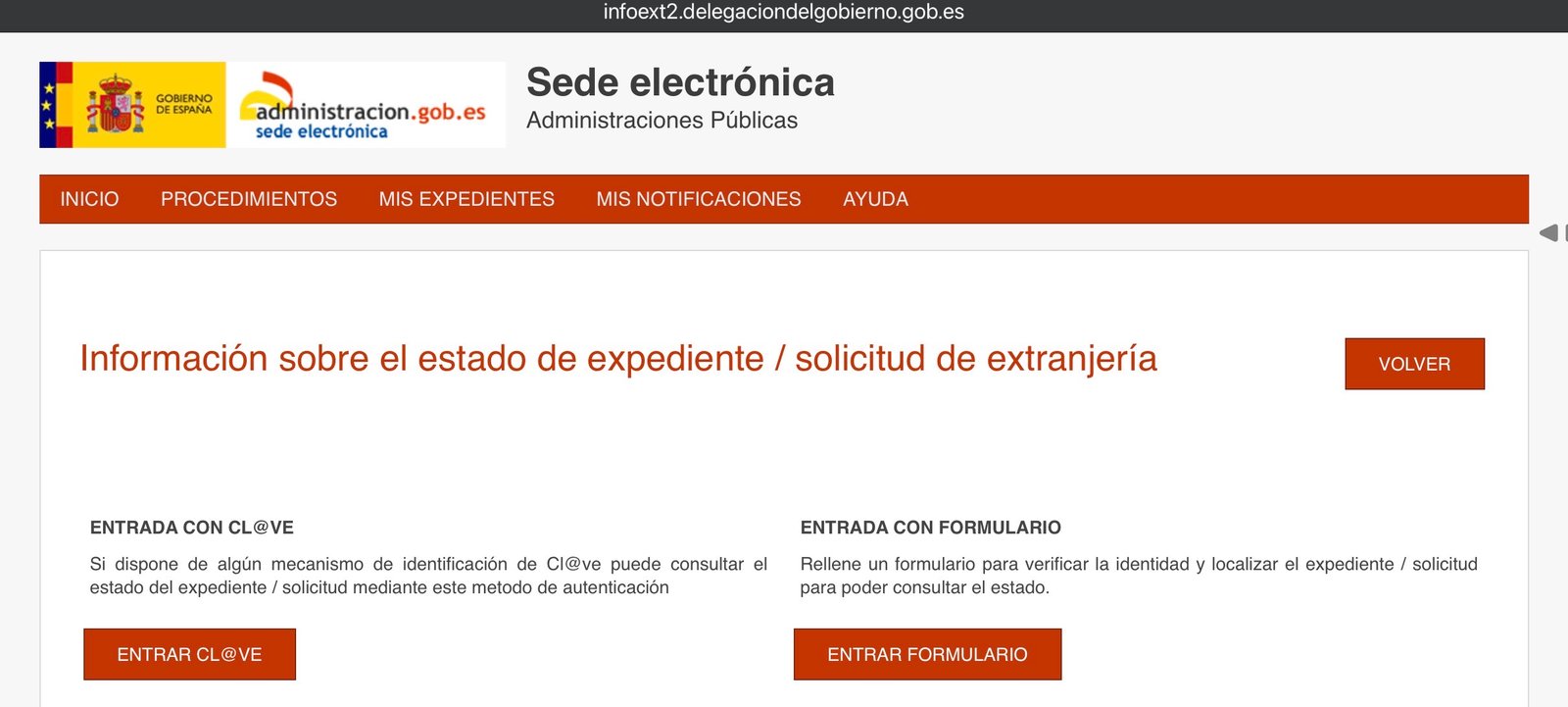
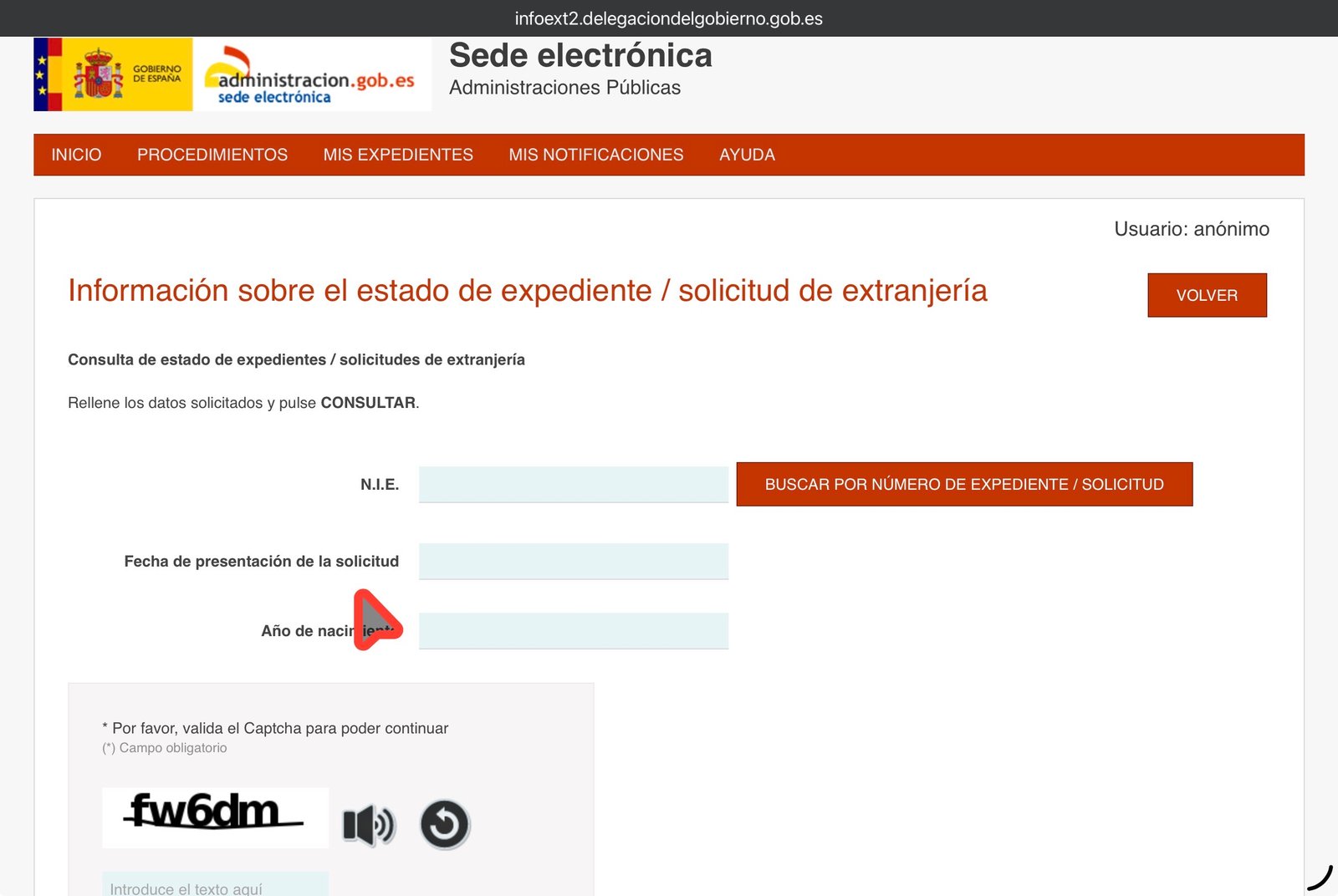
By internet, on the electronic office (the official page is infoext2.delegaciondelgobierno.gob.es). There you may enter in two manners:
- with digital identification (Cl@ve or electronic certificate), if you possess it; or
- without digital identification, by completing a form. It will request your NIE, the date on which the application was submitted, and your year of birth, and you will have to copy a small security code (a captcha) that appears on the screen. You may also search directly by the file or application number.
If you do not possess that data, do not remain in doubt: at the social services or at a collaborating entity they can assist you in ascertaining it. Nobody has the right to conceal from you the information regarding your own situation.
If what you experience at home is abuse
There is a telephone number you can call: 016. It responds in numerous languages twenty-four hours a day, it is free of charge, and it leaves no trace on the telephone bill. Requesting information commits you to nothing.
Possessing your papers changes your life: it permits you to work, to move, to request assistance, and to decide for yourself. Few weeks remain. Take the step for yourself.
@intercultural-infoSubscribe for updates and video tutorials →Legal disclaimer: this content is provided for informational purposes and does not constitute legal advice. For individual situations, consult a qualified professional in immigration law or an accredited collaborating entity.
Sources
- Royal Decree 316/2026, of 14 April (BOE-A-2026-8284) — application deadline until 30 June 2026.
- Ministry of Inclusion / La Moncloa — deadlines, requirements, and submission channels.
- Electronic Office for Immigration (Sede Electrónica de Extranjería) — consultation of file status by SMS (651 714 610) and by internet, with and without digital identification.
- Telephone service 016, providing information and guidance to victims of violence against women (Ministry of Equality).